


By Alyssa McMillan
Imagine getting a letter in the mail from Publishers Clearing House. Congratulations, you won! A check worth thousands of dollars is enclosed in the same envelope, with your name on it. All you have to do is cash or deposit the check and send a payment to cover taxes, fees, and other expenses.
This is a scam. The check you receive won’t clear the bank. The check you send will be cashed somewhere.
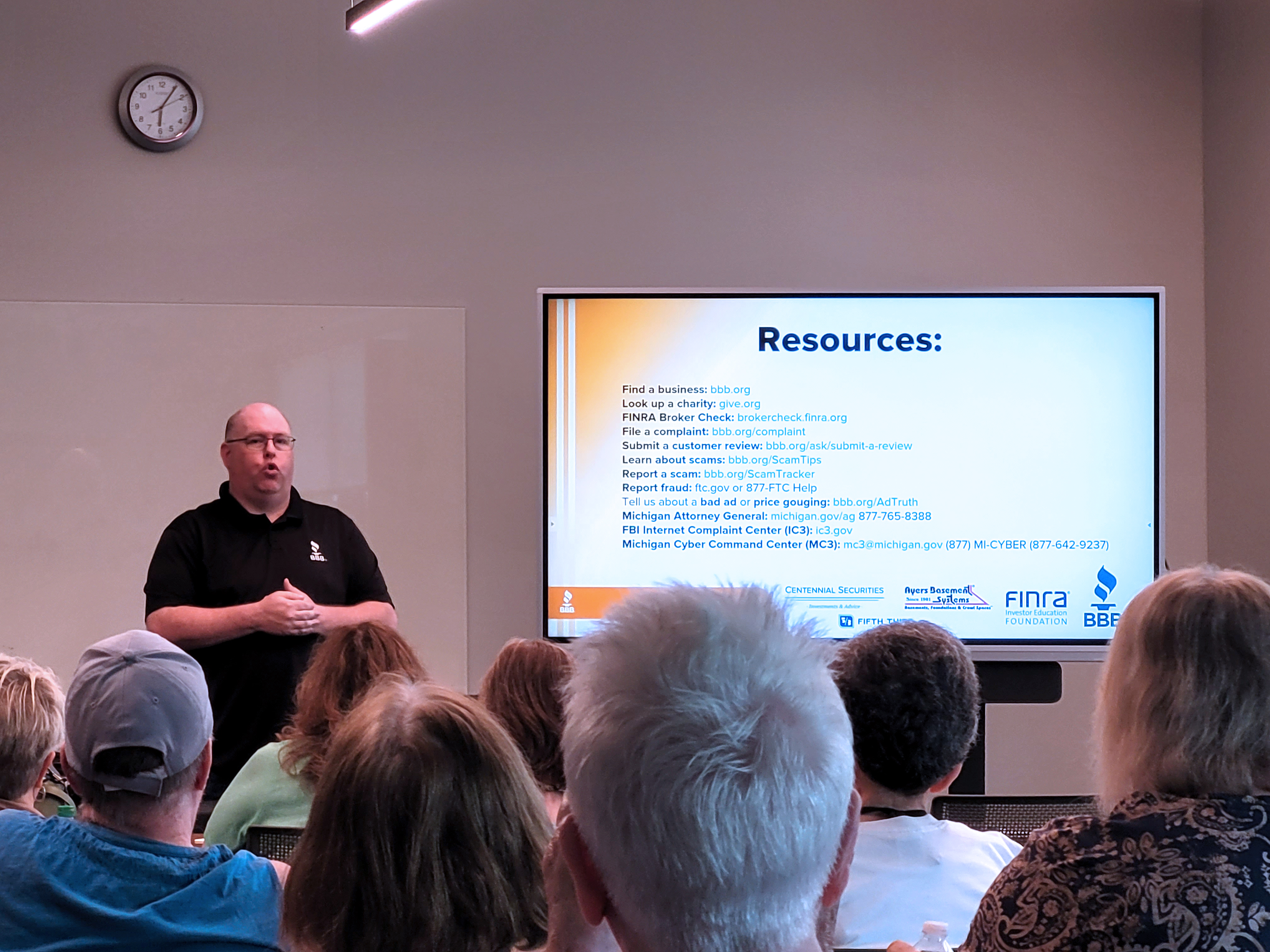
The scenario was one of several presented by representatives of the Kalamazoo County State Bank and the Better Business Bureau during a scam awareness presentation at the Portage Zhang Senior Center.
Bureau representative Troy Baker opened with humor and a game to help audience members identify scams, presenting scenarios and asking the audience to vote on whether a situation was a legitimate transaction or a scam. After each scenario, Baker explained what should have told the audience that they were being scammed or what could assure them that they could trust what they were seeing.
“A lot of scammers look normal,” Baker said. “You need to know what to watch and avoid.”
In the previous scenario, audiences learned about one of the most common modern-day scams: that Publishers Clearing House version. Scammers cloud their victims’ judgement by creating false excitement in a need to act quickly. They trick people into writing and sending a check to cover imaginary expenses, only for the check with thousands of dollars in “prize money” to bounce. Even after victims realize they’ve scammed, they still lose the money they thought they were spending on taxes and other fees.
Other ways to identify a scam include reading email and website addresses to make sure they’re not scammers posing as reliable companies. Email addresses should make sense and look professional. The name of a company in an internet address should be spelled correctly and be placed directly before the final .net or .com. Trustworthy website addresses should start with “https” or have a lock symbol somewhere on the search bar to signify that they are secure.
Baker urged attendees to consider poor spelling and grammatical errors as signs of a scam. However, these are becoming less common as scammers begin to use artificial intelligence to write emails and text messages for them. AI has also given scammers the ability to make themselves sound like other people, such as the friends or relatives of a potential victim.
To help victims protect themselves against scammers using modern technology, Baker told the audience to ask themselves a series of questions if they felt like they were being scammed: Does it make sense for you to be receiving this? Are you on a reliable website? Is this normal behavior for the person or company you’re dealing with?
The most vulnerable people to scammers are individuals who are financially unstable, lonely or isolated, or don’t know the signs of scams. Anyone who thinks they may be getting scammed is also encouraged to talk to a close friend or trusted acquaintance—like a local bank teller—to get another opinion on the situation.
Other basic rules to follow when looking for a scam: No one should have to pay to collect a prize. No one should be required to act immediately for fear of losing something or going to jail. And “If it sounds too good to be true, it probably is.”
Audience members were sent home with a folder of resources to help them find and verify trustworthy businesses, better understand specific types of scams, and know what to do if they have been scammed already.