

The tri-colored heron, formerly known as the Louisiana heron, is not a Michigan resident but has made several unexpected visits to our state. Every now and then, this beautiful bird overshoots its migration route and ends up here in early spring or late summer. Michigan is far outside its normal migration range and finding one here is an extremely rare but exciting event! All of my sightings have taken place in Florida where tricolored herons are both widespread and permanent residents.
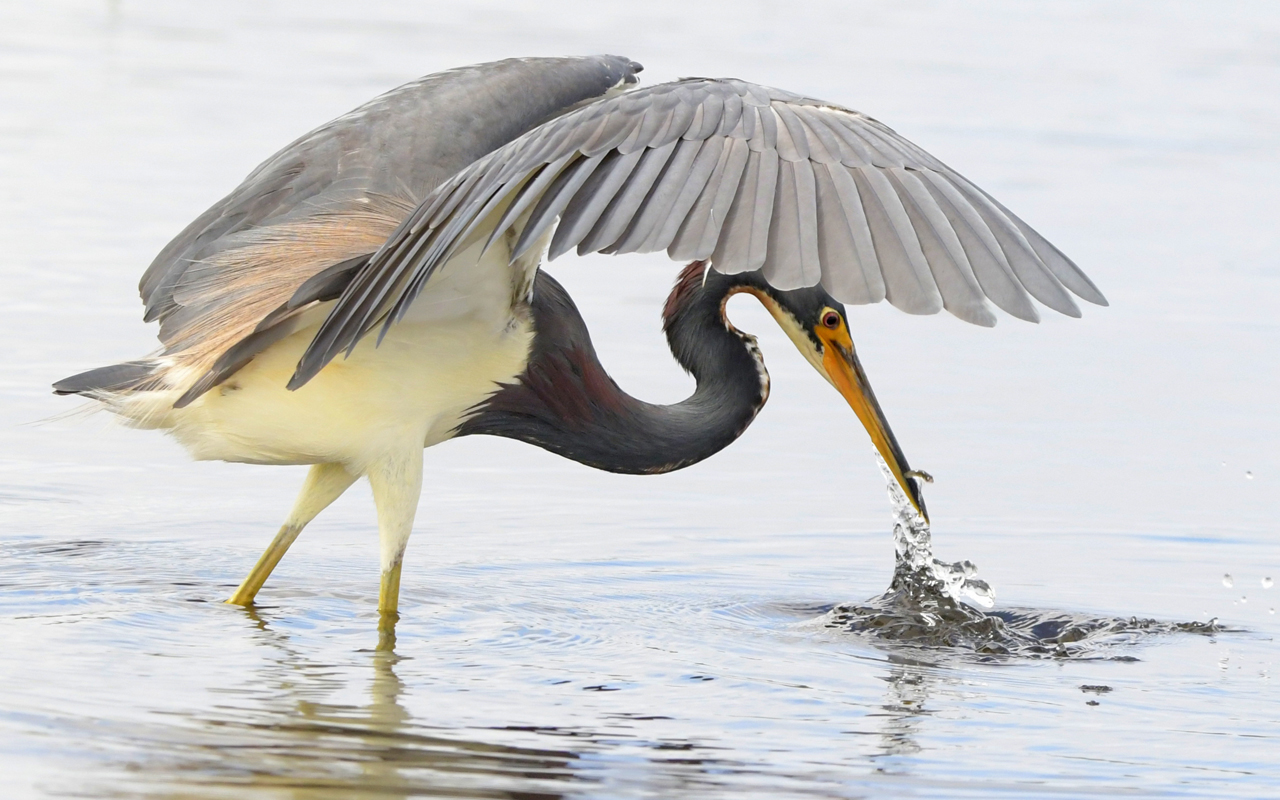
If you’ve never seen a tricolored heron, they’re slender, medium-sized shorebirds with a mix of blue-gray, lavender, and white feathers, a distinctive white stripe down the middle of their long, sinuous neck, and a white belly that sets it apart from all the other darkly colored herons. I was surprised to learn that tricolored herons are only two feet tall and weigh less than a pound. By comparison, the great blue heron, a bird I am much more familiar with, is 4 feet tall and weighs around 5 pounds.
During breeding season, both the male and female tricolored herons dress for success! They develop long, white plumes that flow gracefully from the backs of their heads, display bright, cobalt-blue bills with a distinct black tip, sport colorful pink legs, and have intense-looking scarlet red eyes.
I have loved watching and photographing these birds over the course of several years while visiting Florida. They are beautiful as well as entertaining birds to watch as they search for fish and other prey in the shallow coastal wetlands, saltwater marshes, and mangrove swamps. Most of the other herons I’ve observed, like the great blue herons, green herons, and little blue herons, prefer to wait patiently for a fish to swim by. Not the tricolored heron! It runs, jumps, lunges, and pirouettes, all while holding its wings outstretched as if engaged in a modern, uptempo ballet of its own creation.
This energetic dance routine is the heron’s way of herding all the little fish together so they’re easier to catch. Just below the surface of the water, the heron is also stomping and kicking the muddy bottom trying to drive hidden prey out in the open for even more tasty treats. As sunset draws near, and fishing time draws to a close, the tricolored heron becomes even more animated!
Periodically, this dancing bird will stop, bend forward, and position one or both wings over its head to entice fish into the shade cast by its wings. This method of fishing is called “canopy feeding” or the “umbrella effect.” By pulling its wings forward and curving them over its head, the heron creates a dark patch on the water that small fish mistakenly view as a safe shelter or as submerged vegetation. They swim directly into the shadow not realizing the danger they are in. The canopy created by the heron also acts like polarized sunglasses for the bird; allowing it to see through the glare on the water and strike one of the little fish with precision!
Like many other creatures on our planet, this delightful bird faces many threats to its existence: loss of wetland habitats, pollution and pesticides, oil spills, climate change, and other human-initiated crises. They are particularly vulnerable during breeding season if human activity infringes on their nesting sites. They’ll even abandon their nests if humans come too close, leaving their babies defenseless against predators and vulnerable to the whims of Mother Nature.
In Florida alone, where the tricolored heron was previously considered one of the most common herons in the state, there’s been such a significant decline in their population over the last decade that it’s now considered a threatened species; at high risk of disappearing completely. Sadly, tricolored herons are also declining throughout their North American range.
The fate of these tricolored herons, as well as the fate of all the other creatures we share this planet with, is in our hands.
What harms them, harms us.
We are all connected.