by Justin Gibson | Apr 6, 2018 | Schools, Vicksburg
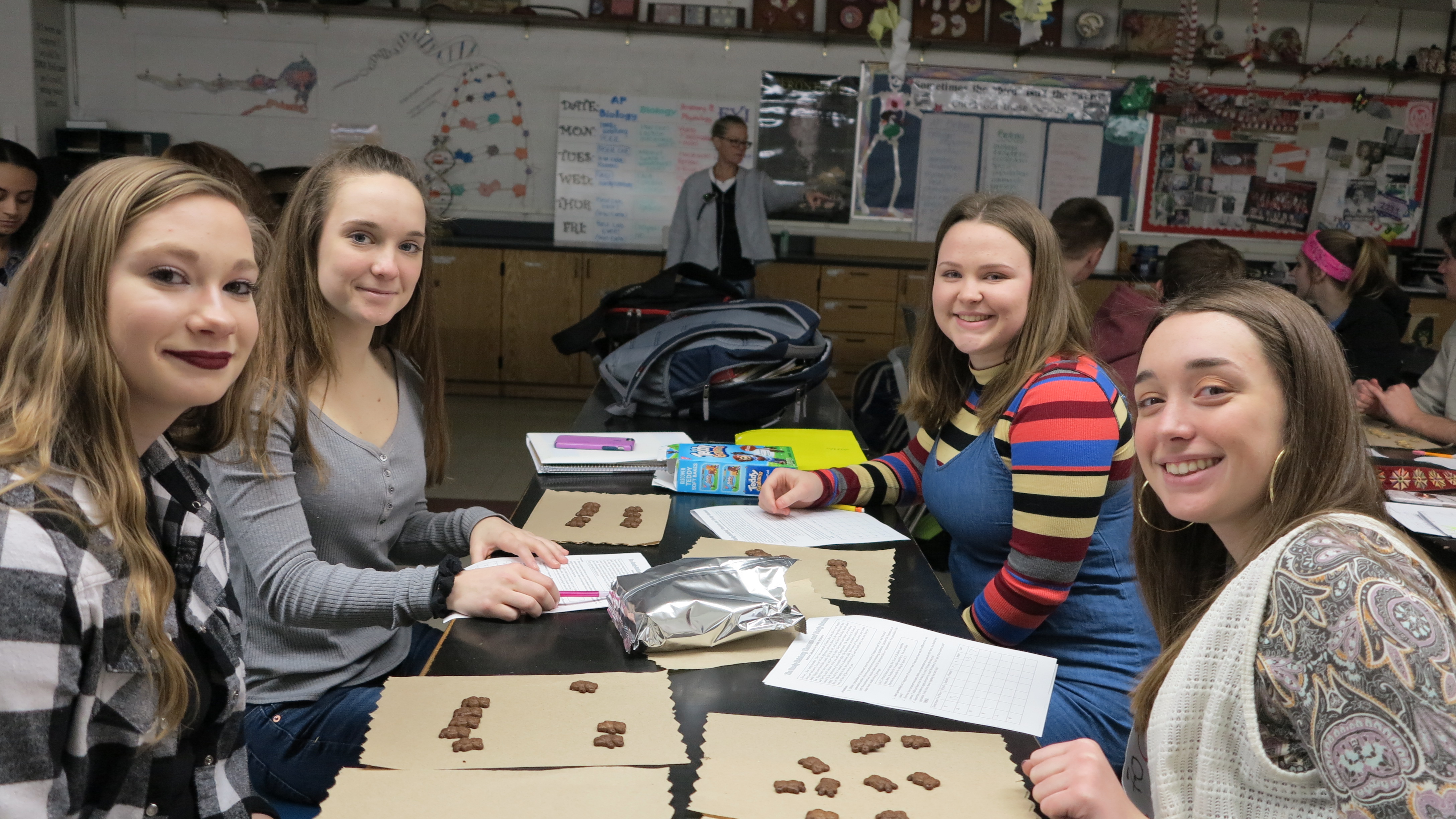
AP Biology students use hands-on learning to see how genes stay in equilibrium in populations. Right to Left: Samantha (Sami) Trimble, Emmaline Miller, Katelyn Woosley and Leeanna Wagner.
By Steve Fryling, Vicksburg Schools Communications Director
Examine the vision or mission statement of most any school district in Michigan and it will be some play on the phrase, “get all students college- and career-ready.” Vicksburg Schools are no different. To make this vision happen, schools have to offer ways for students to “go beyond” regular classes. For some students, courses or training in different career fields (which in previous generations was called “vocational education”) is best. For others, having them take college courses, either at college or in the high school classroom, is the key. But for others, what is best is providing very challenging, high level versions of regular courses.
These courses are called “AP” or advanced placement courses. The courses are created by a national organization which writes the course guides, trains teachers and then creates and scores a test taken by students at the end. That test score, if high enough, is accepted by most colleges across the nation as credit for a college level course. That means if students take enough AP courses and test well enough in them, they can earn in some cases more than an entire freshman year of college credit, at very little cost and no student debt. This allows students to graduate from college in less time and with less debt than ever.
Vicksburg High School has been honored as a national leader in students taking AP courses. Last year 495 AP courses were taken at VHS; 51% of the students who took the exams earned a score high enough to get college credit. The challenge is to get even more students to take AP courses and for more of them to take the exam (which is optional) and to score well on it, said Keevin O’Neill, Vicksburg High School principal.
To encourage students and their families to take more AP classes and take and succeed on the exams, the district proposes to create a special diploma program called the “AP Capstone Diploma”. This diploma would show colleges that the student has spent time in more challenging classes and would give them a leg up in getting accepted to even the most prestigious colleges, with many of their basic credits already earned.
To earn this diploma, students would start early on, as sophomores. These students would take a special AP seminar class where the instructor would help them to improve their skills in analyzing issues, make strong arguments in writing, and to collect, analyze and present information accurately, using team presentations and projects to find out how well they have honed these skills.
The students would then take an AP research class in which they learn how to do the kinds of research they would be asked to do in college. They would learn how to pose a problem or question, investigate and gather the information needed to address the problem and then present what they found in a written and verbal form.
After these two foundation classes, students would then take the AP courses they chose in grades 11 and 12. If they take at least four AP classes and score high enough on the exams for each, they would be granted the AP Capstone Diploma.
It will take money and training to bring this to Vicksburg. One of the more pressing needs is financial support to allow students to take the exams, as each exam costs a student $94 to take. Another need: resources to train a current VHS teacher to be a capstone instructor, who would teach the seminar and research class and administer the program.
The Vicksburg Community Schools Foundation recently approved a request made by O’Neill and Superintendent Charlie Glaes for just over $10,000 for training so teacher selection and training could begin next school year and the program itself could start in the fall of 2019. Finding funds to help with exam costs may be considered by the foundation at a later time.
“Colleges are getting some very strong Vicksburg graduates and making them even stronger and more skilled. We asked ourselves how can we start building on the academic skills these young people have at an even younger age to give them an even greater advantage in college and careers. The AP Capstone Diploma is an effective vehicle to get these kids challenging themselves early and building skills well before college,” Glaes said.
“The Foundation will help us to put this into action without extra cost to the taxpayers, allowing us to use the money saved to support all of our students.” Glaes also added that general education funds are also going to fund other avenues for students’ success in life, such as career and arts training, college class enrollment (known as dual enrollment) and the Early Middle College program, which allows students a period of five years to graduate from high school with a community college diploma, through classes taught both at the high school and at KVCC.
by Justin Gibson | Apr 6, 2018 | Schools, Vicksburg
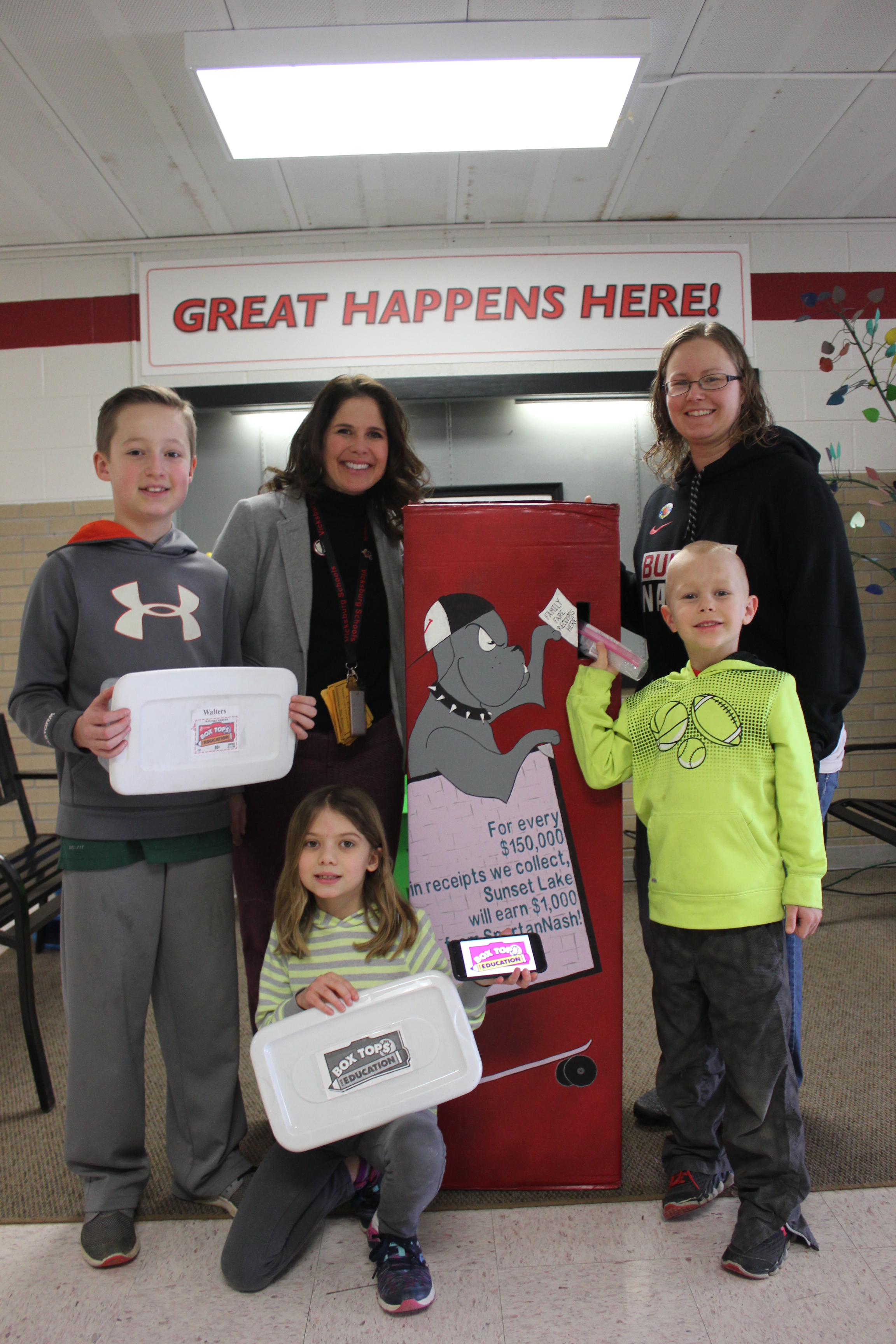
Students stand in front of the donation bin for box tops at Sunset Elementary school. They are from left: Brady Young, Erica Centofanti, and Ryker Caswell. Adults are Principal Amie McCaw and Rachelle Caswell.
By Sue Moore
Some things never change. In the 1940s, 50s, 60s, the Box Top ladies of the Hospital Guild in Vicksburg collected box tops to turn into cash. They were able to purchase several new pieces of equipment for Franklin Community Hospital down through the years.
Now students in Vicksburg’s elementary schools are collecting box tops to turn into cash. At Sunset Lake Elementary last year, the money bought Chromebook computers for each student. The box top money has also purchased playground equipment, enhancements for the school’s courtyard and facility improvements.
Some of the common brands that offer box top coupons include Ziploc bags, Hefty, Lysol, cereals, snacks, yogurt tubs, Annie’s brand, Old El Paso and many more, eligible if they’re within a printed expiration date. The PTSO set $6,000 as its goal for the 2017-2018 school year and just redeemed $1,582 in box tops. They are collected all year round but redeemed in December and March. Since the program started at Sunset they have earned $37,176.
It all goes to a good cause and Rachelle Caswell of the Sunset PTSO is urging parents, grandparents and friends to save the box tops and drop them off in a collection box just inside the door of the elementary building.
And there’s another fundraiser, this one working with Family Fare in Vicksburg and other SpartanNash stores, including D&W in Kalamazoo: Shoppers drop off grocery receipts from the stores. When the school collects $150,000 in receipts, SpartanNash through its Direct Your Dollars program will send Sunset Lake PTSO $1,000 to use any way it chooses. At the price of groceries these days, it shouldn’t take long for the school to reach that $150,000 plateau if people will save their receipts, Caswell said.
The school works to raise money for extras that tax dollars don’t support through a Walk-athon on Friday, May 4. This usually is directed toward the businesses in Vicksburg which sponsor entrants or provide donations based on how many miles children can walk during the event.
Sharon Visser, this year’s president of the PTSO, designated Caswell to head up the box top collections. She and her husband Cody have three children at Sunset. He came here as the JV football coach, assists with the track program at the high school and was a Vicksburg graduate a few years ago.
by Justin Gibson | Apr 6, 2018 | Schools, Vicksburg

Technology students at Sunset Lake Elementary, from left: Brady Young, Fletcher Haas, fifth grade teacher Dawn Phelps, Grace Zimmerman, Jaidyn Johnson, Josie Stephenson and Lily Johnson.
By Linda Lane
As Vicksburg’s Sunset Lake Elementary progresses with its adoption of “The Leader in Me” program, more and more students there are taking on a wide variety of leadership roles. A team of fifth grade “Technology Leaders” from Sunset went to Lansing to present how they use technology in their classrooms and school. With the backdrop of a “green screen”, the students presented to legislators the various ways technology is used, including promoting events, taking tests and quizzes, learning about social studies and science and even doing newscasts.
The green screen allows people standing in front of it to insert a different backdrop when it is broadcast over the internet or on television. This technique is used daily in television news rooms, most often with meteorologists as they present weather forecasts in front of a map.
“Every kid has a voice, with a microphone,” Don Puckett explained. “And in all of our schools, technology is really helping teachers, even in the gym.” Puckett, technology director for Vicksburg Community Schools, presented the wide range and scope of technology and its use in the educational system at the Vicksburg School Board’s February meeting.
Puckett illustrated one use as board members and people in the audience logged onto “kahoot.it” to answer questions posed. Kahoot is a tool which is being used in classrooms to administer quizzes, tests or surveys. Much like playing a game, students answer questions with their tablet, computer – and in the case of the meeting, people’s smartphones. As in a classroom, participants answered questions at the same time, with results immediately visible. Superintendent Charlie Glaes ended up with the highest score.
As a tool to help guide teachers in developing students’ skills in technology, Puckett’s Technology Curriculum Integration committee created a document outlining where technical expectations are with each grade level so they are clearly spelled out. A list of over 100 skills and abilities are outlined by grade level. Ultimately the goal is for students to complete technology issues with no teacher or adult assistance. Teachers from pre-kindergarten through 12th grade can easily assess their students’ needs and growth expectations to master skills appropriate to their grade level. The document was so highly effective that a statewide group made some minor changes to it and adopted it as Michigan Technical Standards to use as a guideline for all statewide schools.
Vicksburg seems to be a leader in technology; a group of technology and curriculum specialists from Kalamazoo RESA (Regional Educational Service Agency) visited to learn how the district is transforming student learning with the integration of technology.
“This technology is just a tool – like a hammer. You’ve got to use the tool and swing it for it to work!” Puckett said.
District schools have also installed a new clock, bell and paging system which have helped overall communication within the schools, as well as lowering students’ tardiness in getting to classes. Safety and security across the district has also been increased with a number of additional security cameras, including a buzzing-in system in school offices for visitors to the schools. Each year the technology department upgrades and replaces computer “Chromebooks.” The use of Google Classroom plays a big role in all the district’s educational environments, enhanced from improvements in the district’s wireless networks.
“We need to thank our district voters for their support of the 2014 bond issue. The bond that voters passed allowed us to support important technology programs and other building improvements,” Superintendent Glaes said.
Continuous improvements at the Middle School were also reviewed by Principal Matt VanDussen, with a special focus again on results showing each Vicksburg Middle School grade ranking above state averages and ranking higher that other area schools. The staff is implementing a new intervention system for students to identify and address needs before they fall too far behind. Staff is also focusing on a new direction of “Positive Behavior Intervention” concentrating on unstructured areas like hallways, lunches and playground areas.
by Justin Gibson | Apr 6, 2018 | Sports, Vicksburg
Here are the photos and rosters of Vicksburg High School’s Spring sports teams.
-
-
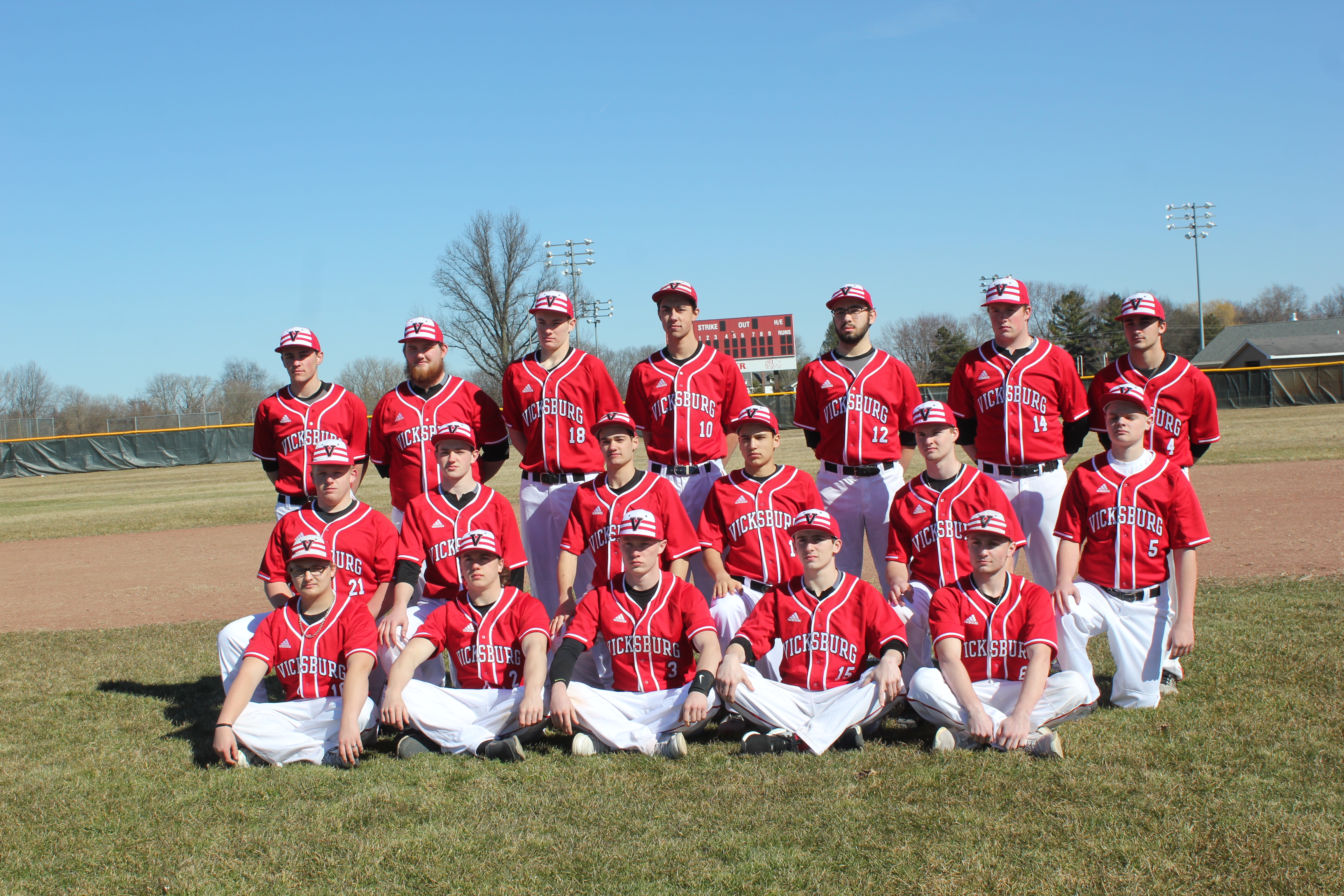
Varsity Baseball Front row, from left: Wyatt Bowling, Adam Henderson, Garrett Ketelaar, Austin Bresnahan, Mike Tultz. Second row, from left: Nick Swope, Joey McCowen, Caleb Conklin, Jacob Conklin, Carter Ford, Parker Wilson. Back row, from left: Trevor Pryson, Grant Deal, Tyler Vallier, Hunter Myers, Ryan Verner, Cole Mallery, Ryan Morgan. Not pictured: Coach Brian Deal.
-
-
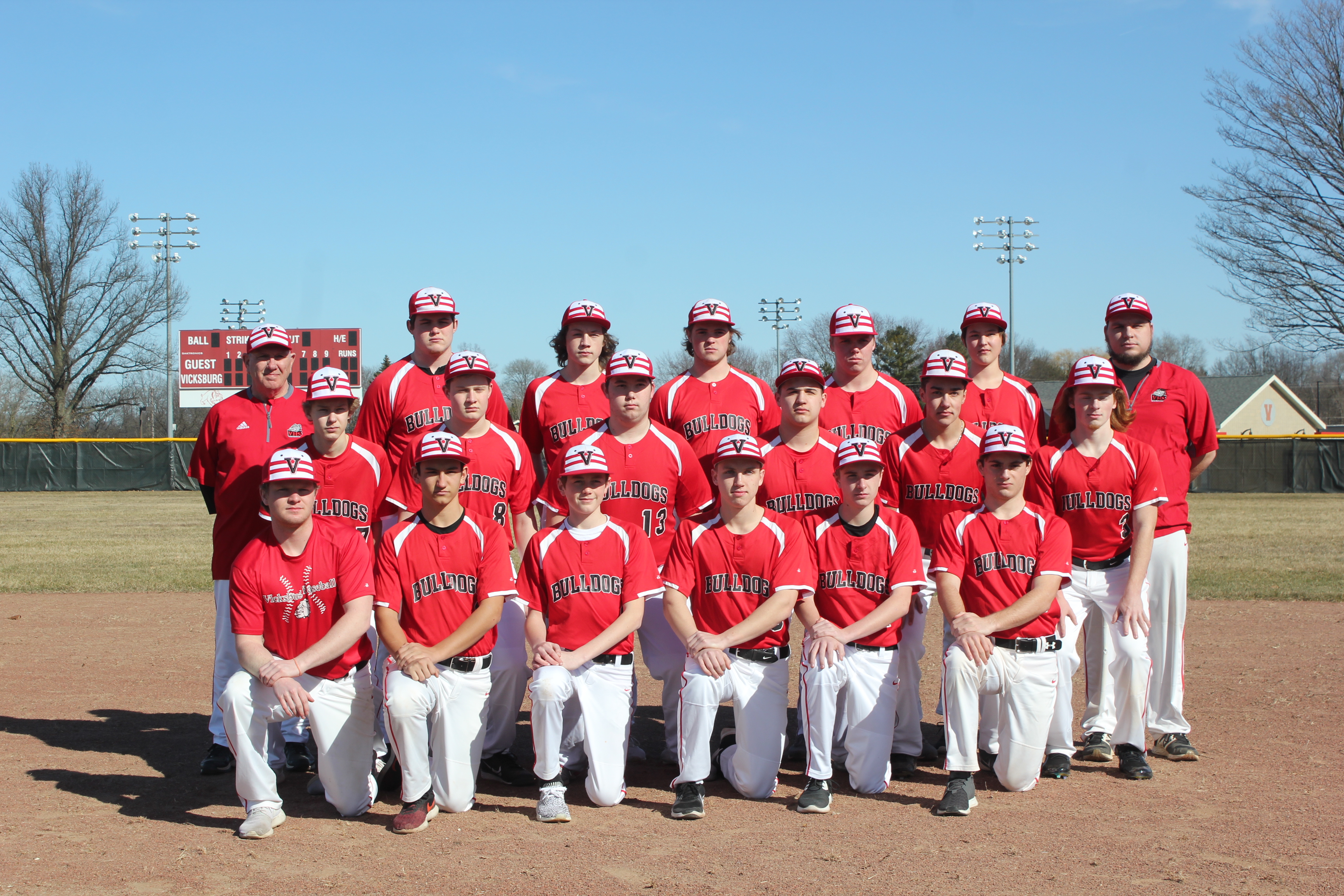
JV Baseball Front row, from left: Assistant Coach Hunter Van, Ben Hackman, Evan Frank, Christian Roth, Zach Myers, Brendan Monroe. Second row, from left: Levi Root, Trevor Young, David Benedict, Logan Sprinkle, Zach Myers, Ben Welch. Back row, from left: Assistant Coach Jim Nimmo, Kyle Rose, Breckin Burdette, Austin Ziegler, Sean Kelly, Drew Lamb, Coach Kyle Owen.
-

-
Varsity Softball Front row, from left: Keagan Kelley, Danielle Diekman. Second row, from left: Rylie Richter, Kelsey Diekman, Kali Yant, Tailynn Knapp, Lauren Goertler, Cydney Foster, Coach Paul Gephart. Back row, from left: Assistant Coach Lee Noel, Hannah Vallier, Remi O’Neill, Camille Wadley, Avery Slancik, Lilian Vaughn, Assistant Coach Mike Slancik.
-

-
JV Softball Front row, from left: Sydney Finos, McKenzie Slater, Paige Yant, Payton Lewis, Kari Key. Second row, from left: Lindsey Musser, Mykah Zehner, Samantha Fritz, Sarah Sutter, Brianna Hamilton. Back row, from left: Assistant Coach Tim Kirby, Ally Barga, Jordan Cook, Marley Ferguson, Abbey Lafler, Olivia Grinnell, Coach Brian Kelley.
-
-
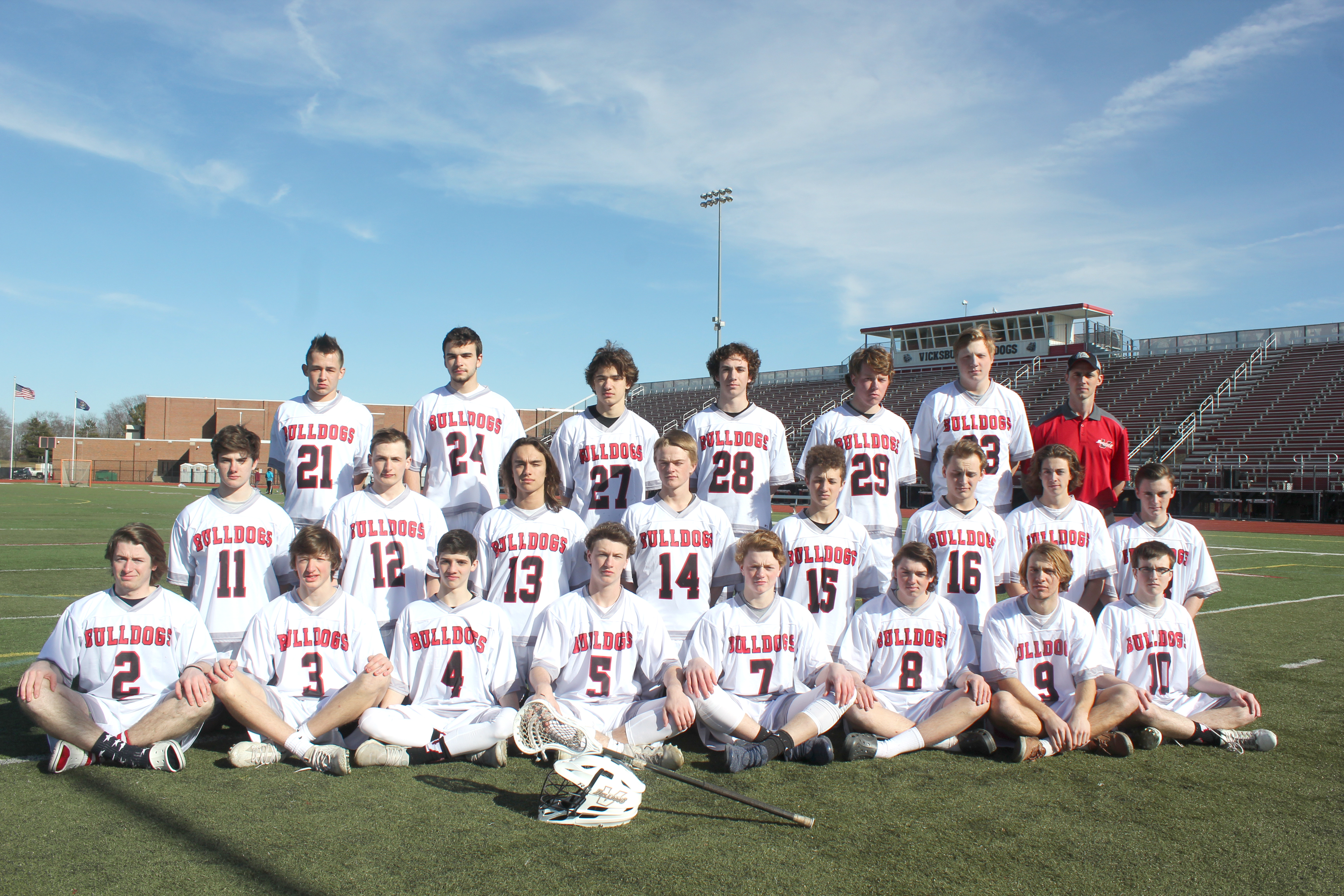
Boys Varsity Lacrosse First row, from left: Tim Gearig, Alex Shook, Colby Klein, Michael Kessler, Krew Conroy, Sam Gearig, Connor Seifert, Ben Buell. Second row, from left: Brennan Johns, Alec Brayton, Dominic Buentello, Ryan Fort, Drew Fitzsimmons, Jacob Yeck, Gavin Leach, John Carr. Back row, from left: Josh Holmes, Chase Young, Adam Verner, Aaron Phelps, Kyle Kelly, Matt Hybels, Coach Ben Wolfman. Not pictured: Brennan Hamilton, Nick Dilly.
-

-
Girls Varsity Lacrosse Front row, from left: Adele Wilson, Jordynne Haines, Jaci Spicer, Kayla Hall. Second row, from left: Katie Flintrop, Kearah Williams, Searra Goheen, Carlie Moyer, Amanda Witczak. Third row, from left: Maryssa Wright, Katie Wells-Schmidt, Sydney Andres, Samantha Carr. Back row, from left: Assistant Coach Sara Wright, Isabelle Wilkinson, Morgan Tassell, Coach Charlie Glascock. Not pictured: Taylor Miller. Photo by Lisa Harbour.
-
-
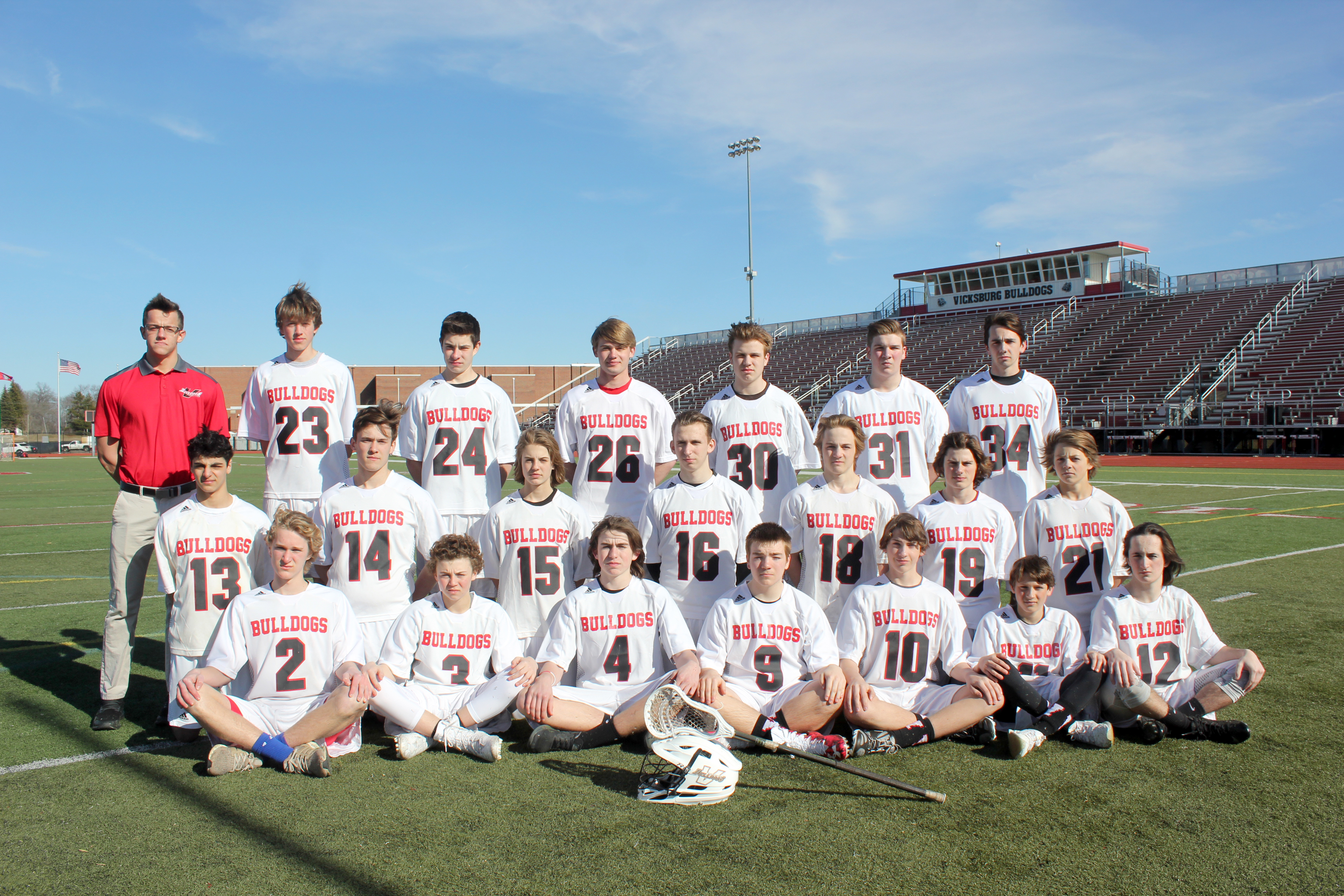
JV Lacrosse First row, from left: Sam Magnell, Rhodes Conroy, Jaden Eaton, Noah Millin, Mathieu Durham, Grayson Pratt, Zane Lehmkuhl. Second row, from left: Nicholas Anstead, Jonathann Warner, Corbin Weed, Oscar Hackman, Griffin Day, Linkoln Oswalt, Colby Leach. Back row, from left: Coach Hunter Lorenz, Dillon Shook, Gavin Statler, Chase Mynhier, Jack Tomer, Carter Coffinger, Kyler Hobson.
-

-
Boys Track In alphabetical order: Mason Adler, Nicholas Akins, Evan Babcock, Landen Balkema, Devon Batten-Coville, Luke Becker, Hunter Bierema, Kameron Bragg, Dylan Briggs, DJ Bullock, Kyle Campbell, Owen Caster, Isaac Cornett, Logan Deluca, Collin Eager, Shane Earl, Logan Edgecomb, Keagan Ellsworth, Jacob Fleming, Kyle Gardner, Dylan Glenn, Ben Green, Tanner Groves, Noah Haines, Casey Hall, Jared Hall, Alex Harsha, Florian Heller, Jackson Hambright, Jackson Holladay, Daniel Howard, Thomas Johnson, James Kienbaum, Tyler Kienbaum, Juchan Kim, Jacob Klimp, Shaun Knauer, CJ Laske, Elijah Lockett, Joseph Loriso, Jacob Malocha, Guillermo Martinez, David Pitts, Sean Raines, Ethan Razmus-Buscher, Justin Reed, Andrew Reno, Connor Richardson, Brian Roberts, Cole Romig, Carter Root, Ryan Salazar, Trae Sehy, Ty Shelton, Alex Smith, Andrew Smith, Jay Snyder, Drake Steele, Chase Stenger, Kyle Strong, Levi Thomas, Kevin Veld, Caleb Wilcoxson, Jacob Wisser, Noah Wright. Coaches: Dave Smith and Jon Kachniewicz. Assistant Coaches: Donna Halferty, Cody Caswell.
-
-
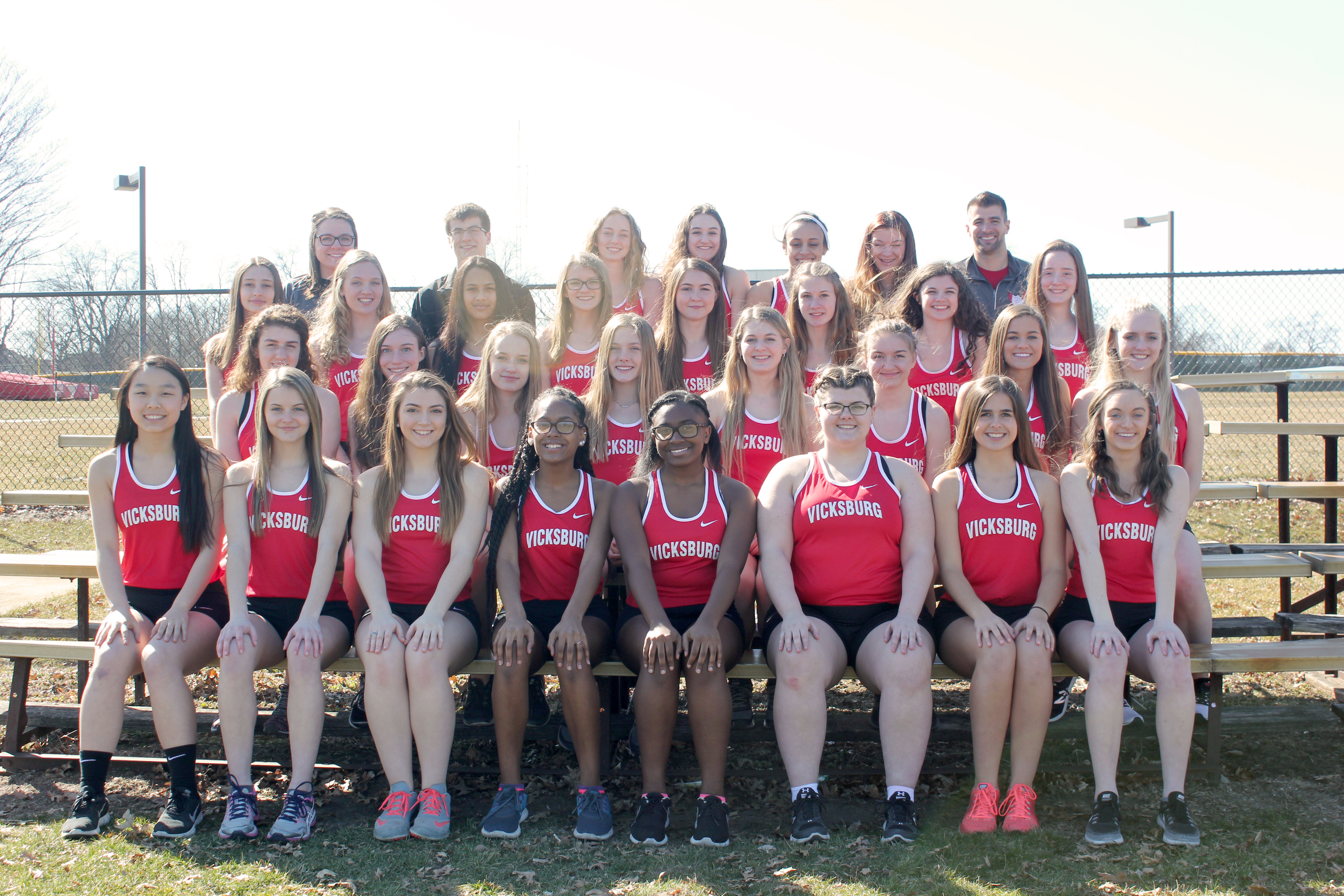
Girls Track Front row, from left: Gracie Cornett, Riley-Ann Bierema, Taylor Grigg, Jayla Lockhart, NevaeH Randle, Paris Price, Avalee Goodman, Megan Bresnahan. Second row, from left: Angie Loriso, Sawyer Barton, Stacy Fogleson, Annie Gebben, Kayla Kline, Natalie Walraven, Grace Wile, Mia Mulhearn. Third row, from left: Allyson Naster, Anessa Laske, Alyssa Thompson, Hannah Fenwick, Paige Abnet, Amelia Ruger, Kinsay Riddle, Angel Currie. Back row, from left: Assistant Coach Jessie DeKoning, Assistant Coach Andrew Skelly, Hannah Flickinger, Anna Knowles, Micayla Bozeman, Anna Freund, Coach Lucas Wolthuis. Not pictured: Trinity Purdiman, Michelle Smith.
-

-
Varsity Golf Front row, from left: Kevin Munn, Seth Crabtree, Dylan Detwiler, Mason Parsons, Taylor Harvey, Cody Vanderhorst. Second row, from left: Brett Manski, Gabe VanDyke, Nick Peacock, Jordan Cosby, Ben Johnson, Regan Powell. Third row, from left: Coach Rob Johnson, Cameron Haase, Tristan Decker, Coach Jim Douglass. Not pictured: Kyle O’Brien and John McNeal.
-

-
Varsity Soccer First row, from left: Dawnara Rollins, Abby Martin, Haley Town, Hailey McConnaghy, Leah Johnson. Second row, from left: Ellie Lancaster, Hailey Burr, Emmaline Miller, Claire Martin, Sydney Martin, Megan Piper, Riley Sibley. Third row, from left: Coach Mike Moldovan, Chloe Hatridge, Morgan Snook, Brady Brown, Alaina Wurfel, Assistant Coach John Cook. Photo by Lisa Harbour.
-

-
JV Soccer Front row, from left: Payton Johnson, Mallory Brayton, Taylor Bays, Katelyn Woosley, Anastasia Carr, Sarah Hewitt. Back row, from left: Victoria Kellogg, Charity Williams, Allyson Hanna, Brianna Petersen, Grace Johnson, Taylor Foster, Sarah Mitchell, Coach Lahou Boulnemour. Not pictured: Kylie Anthony. Photo by Lisa Harbour.
-
-
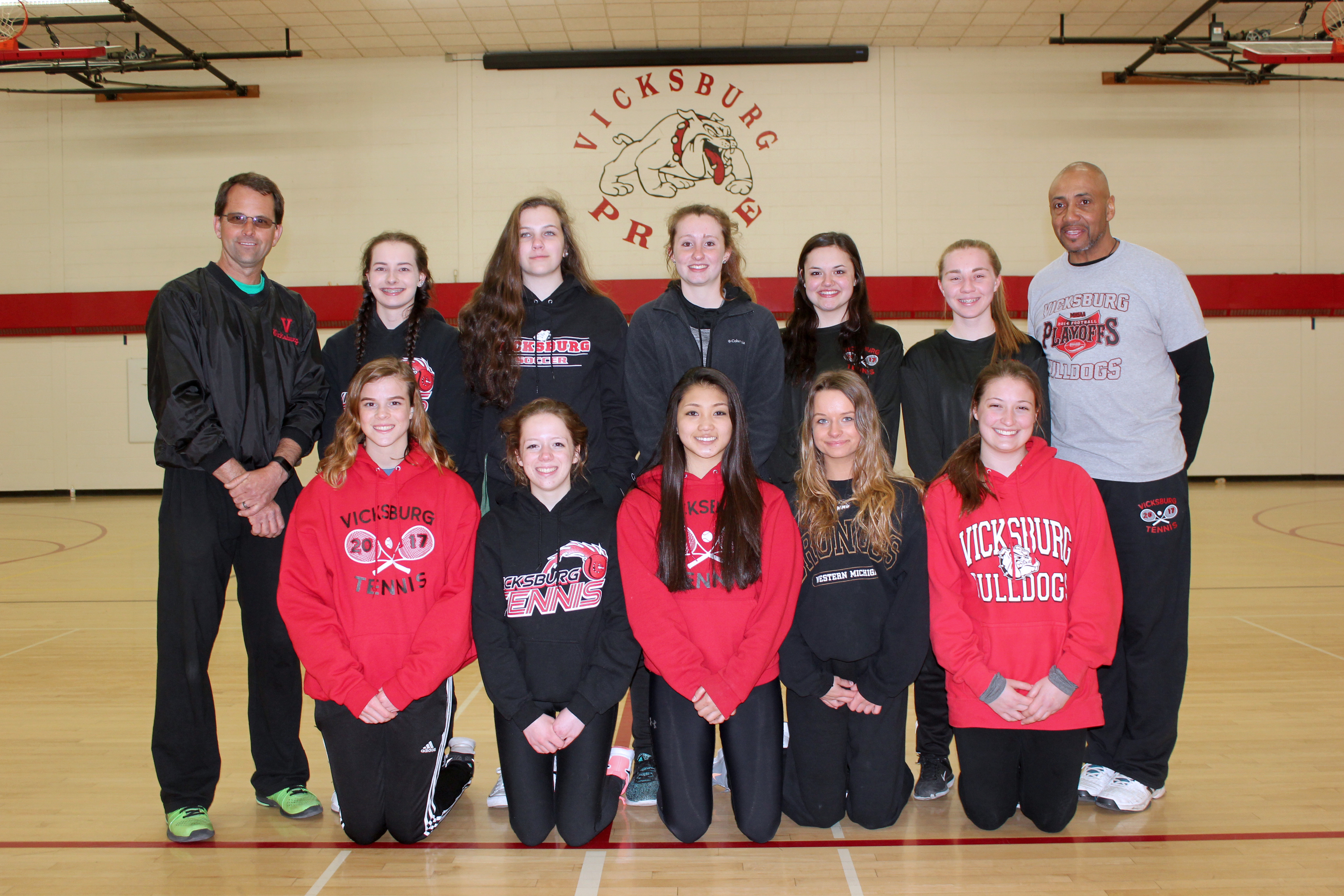
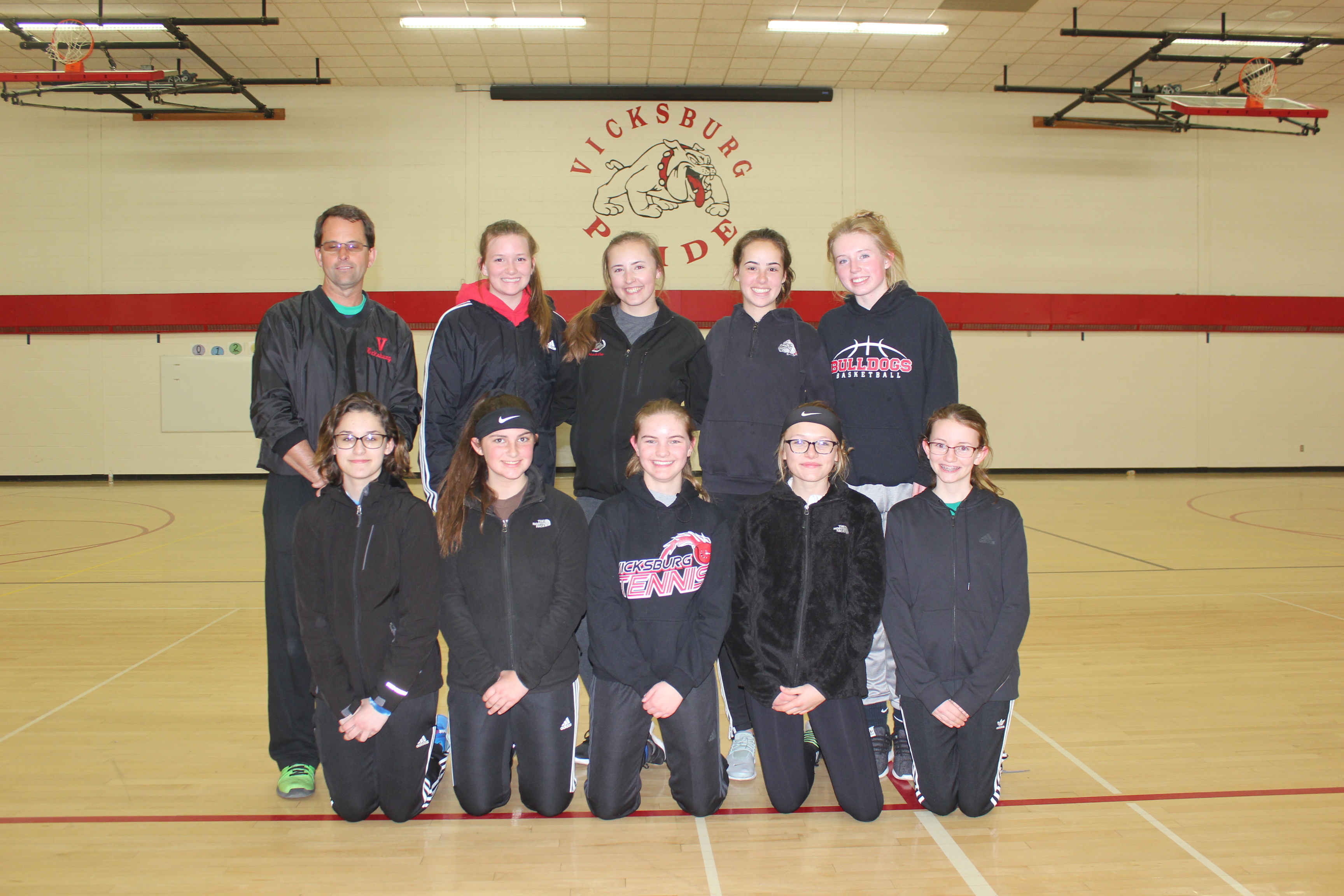
Varsity Tennis Front row, from left: Kaylie Ruch, Zoe Blough, Sophia Breitenbach, Montana Rose, Adeline Reno. Back row, from left: Assistant Coach Eric Flickinger, Makenna Leach, Madison Lowes, Maia Fleck, Brandi Bowdish, Hailey Klimek, Coach Warner Offord. Not pictured: Sierra Stevens.
-
-
JV Tennis Front row, from left: Madison Bullis, Frances Howard, Issabelle Hardy, Mattie Price, Leslie Baird. Back row, from left: Coach Eric Flickinger, Anna Deal, Maddie Johnson, Chloe Stevens, Mikayla Sands. Not pictured: Natalie Arndt, Jenna Beach, Alyssa Kamerman.
by Justin Gibson | Apr 6, 2018 | Sports, Vicksburg
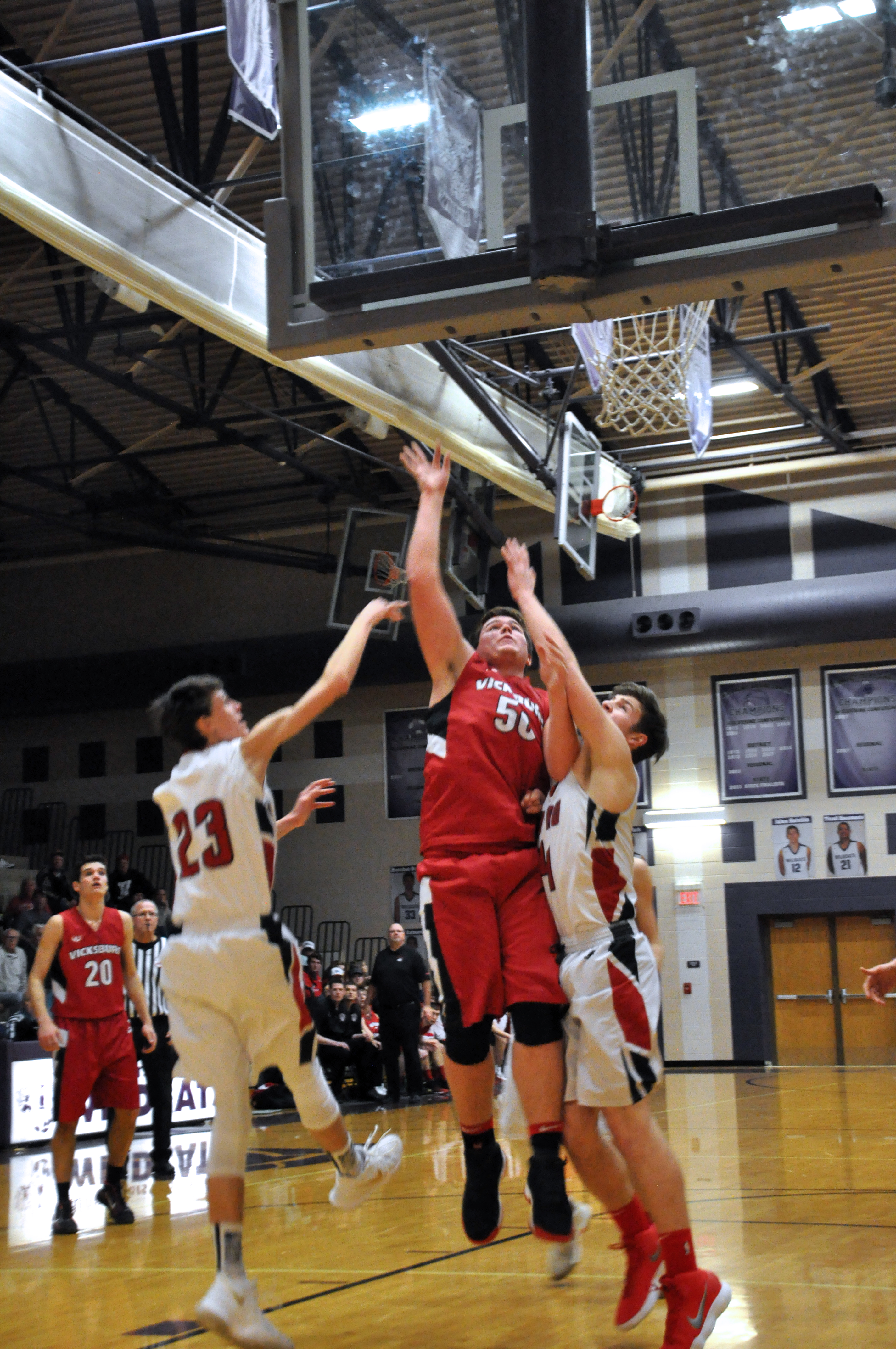
Kyle Rose, number 50 for Vicksburg, goes up for a rebound. Caleb Conklin is number 20 in the background. Photo by Travis Smola.
By Travis Smola
The Vicksburg varsity boys’ basketball team didn’t go down without a fight in the first round of District play against Paw Paw.
The Bulldogs played a wild rollercoaster of a game that couldn’t be resolved in regulation time. Vicksburg ultimately lost to the Redskins 59-52 in overtime. “They played their hearts out,” Head Coach Jeff Lovell said of his team’s performance.
Vicksburg jumped out to an early lead in the first quarter of the game, but it quickly became apparent Paw Paw wasn’t going to go away quietly. The score was 12-11 in the Bulldog’s favor after one quarter. In the second it was all Paw Paw and they stretched out their lead to seven points at halftime.
It set the stage for a spectacular second half of the game where the two sides traded leads multiple times. Leading the scoring for the Bulldogs was senior CJ Laske, who put up 20 points for the team. Fellow senior Garrett Ketelaar was shut down by the Redskin defense before putting up 12 points in the second half of the game to keep Vicksburg right in the thick of things.
The Bulldogs also saw some outstanding defense from brothers Tyler and James Kienbaum, especially in the game’s later minutes.
Vicksburg was up by as many as four points with seven minutes to go before Paw Paw cut it to one before tying the score 50-50 with just 1:13 left in the game. The Redskins had the ball for the last 22 seconds of the game, but the Bulldog defense shut them down to force overtime.
The Bulldogs won the tip-off in overtime and had the first chance to score, but the ball became wedged between the backboard and rim. After that, Paw Paw’s defense seemed to clamp down and Vicksburg only scored two points on a couple of free throws during the extra time period.
The Bulldogs finish the season with a 6-15 record, but that record wasn’t really indicative of how good the team actually was. Many of their losses this year were close games just like this and there was no doubt Vicksburg gave Paw Paw quite the scare in the game. “We had our chances,” Lovell said.
by Justin Gibson | Apr 6, 2018 | Sports, Vicksburg
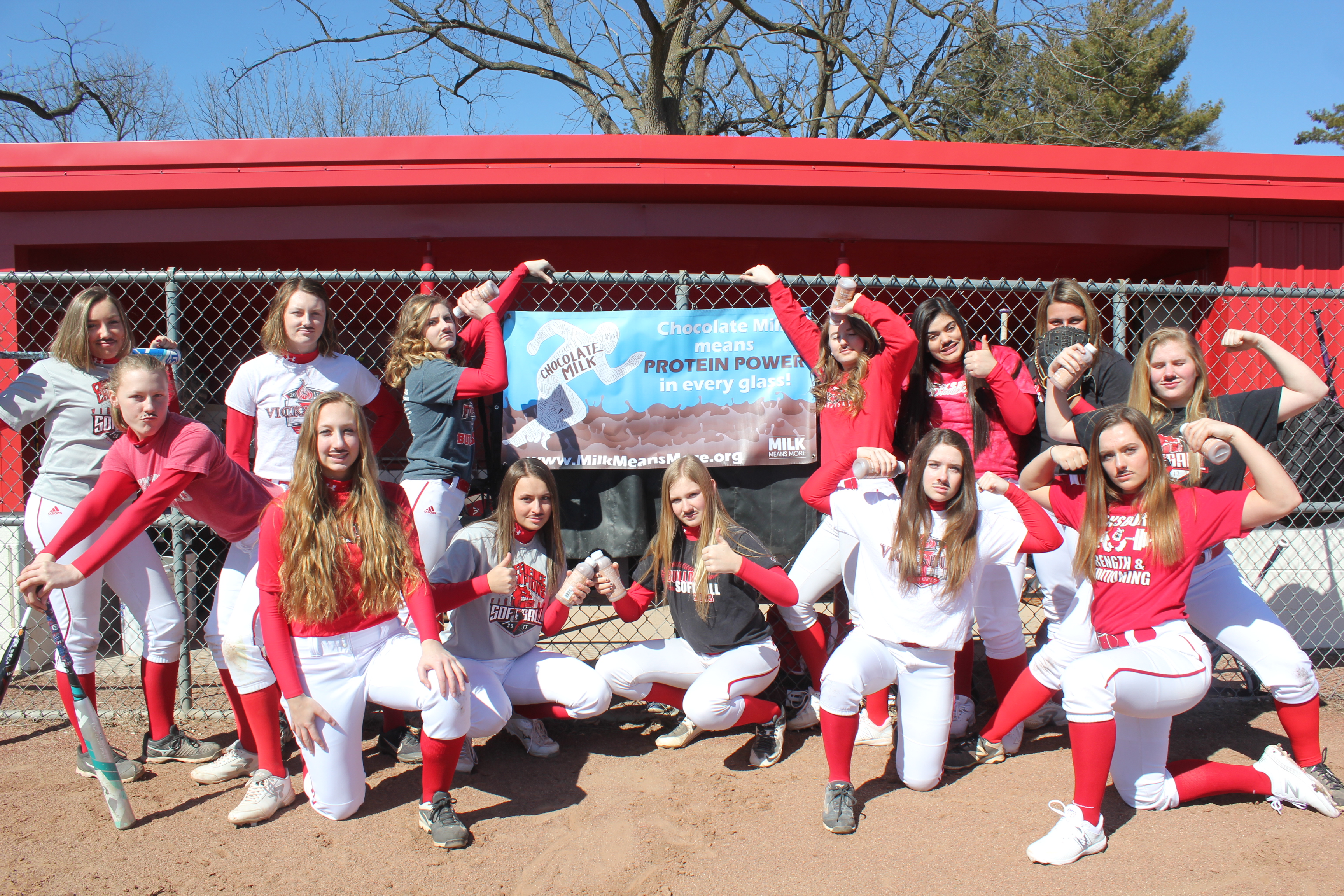
Members of the Vicksburg softball team put on their chocolate milk mustaches, showing how they are powered by chocolate milk each day of the season.
The snow is melting, the temperature is rising, and Vicksburg’s softball team has started the spring season as celebrities – chocolate milk mustache celebrities. The team has been named one of United Dairy Industry of Michigan’s (UDIM) Chocolate Milk: Nature’s Sports Drink grant recipients, which emphasizes good nutrition.
This spring, 88 Michigan high school sports teams were awarded funds to purchase and provide low-fat or fat-free chocolate milk to help their student athletes get the nutrition they need after practices, games and competitions. The grant amounts to $2,200 to purchase chocolate milk. It will buy 15 bottles a day, five days a week for 11 weeks of the 2018 season for the softball team. Vicksburg’s Athletic Director Mike Roy applied for the grant.
To build awareness around the importance of good nutrition, the Chocolate Milk: Nature’s Sports Drink kit includes promotional items and educational materials. The players had fun posing for the picture, pasting the chocolate mustache stickers over their lips and holding up the milk bottles.
“According to the 2015 Dietary Guidelines, Americans of all activity levels over the age of eight should include three servings of low-fat or fat-free milk or milk products in their diet every day. Chocolate milk is a nutritious option to help meet these recommendations,” says Melissa Gerharter, registered dietitian, UDIM. “And what’s really great about chocolate milk is that it packs a powerful nutrient punch, it’s affordable, and it tastes great.”
“Since the grant began in 2011, we’ve awarded over 800 grants to high school sports teams across Michigan,” states Gerharter. “We’re happy to see the impacts that it has had on the overall nutrition of many student athletes already, and we can only hope that it will continue to gain momentum.”