


By Jeanne Church
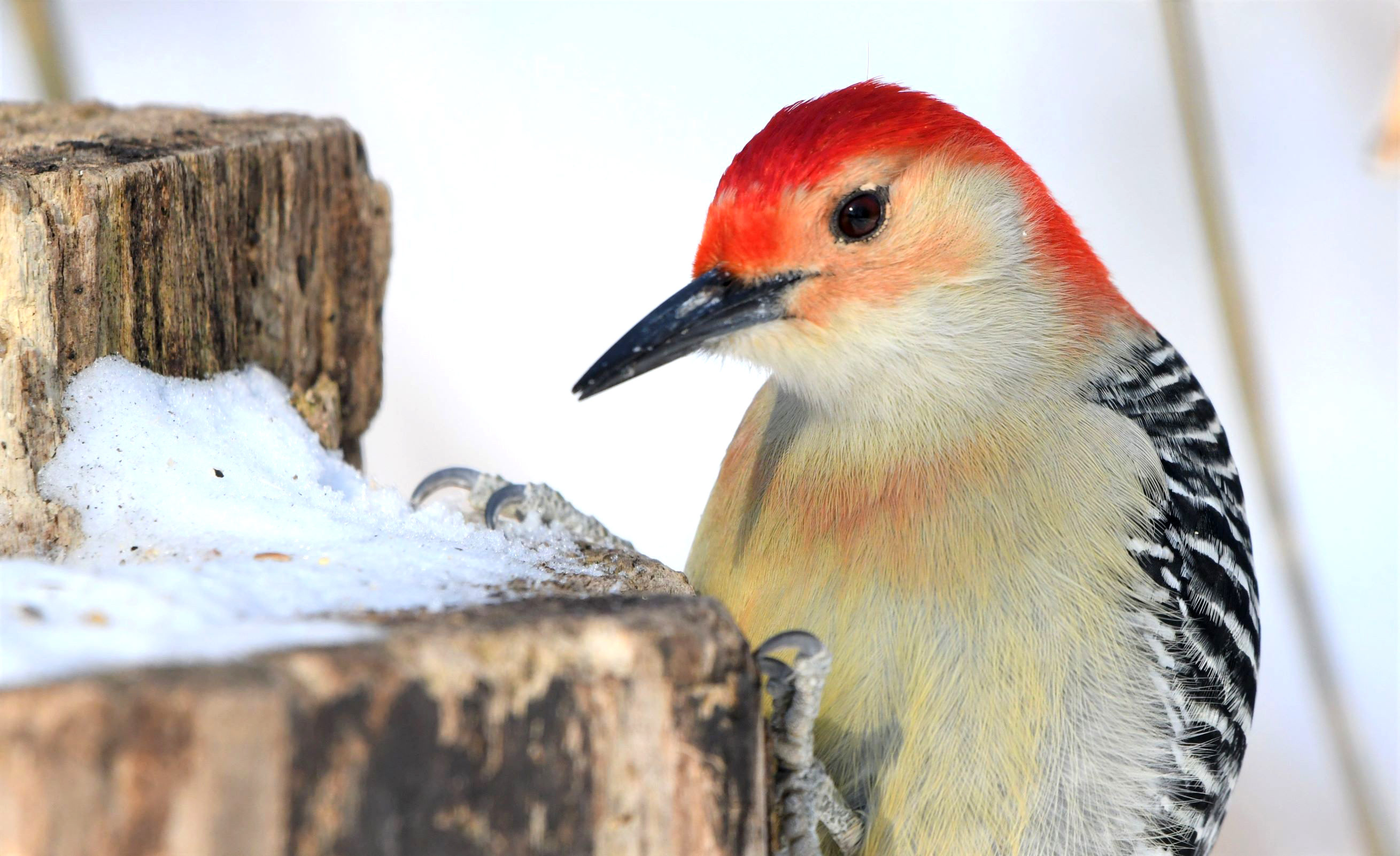
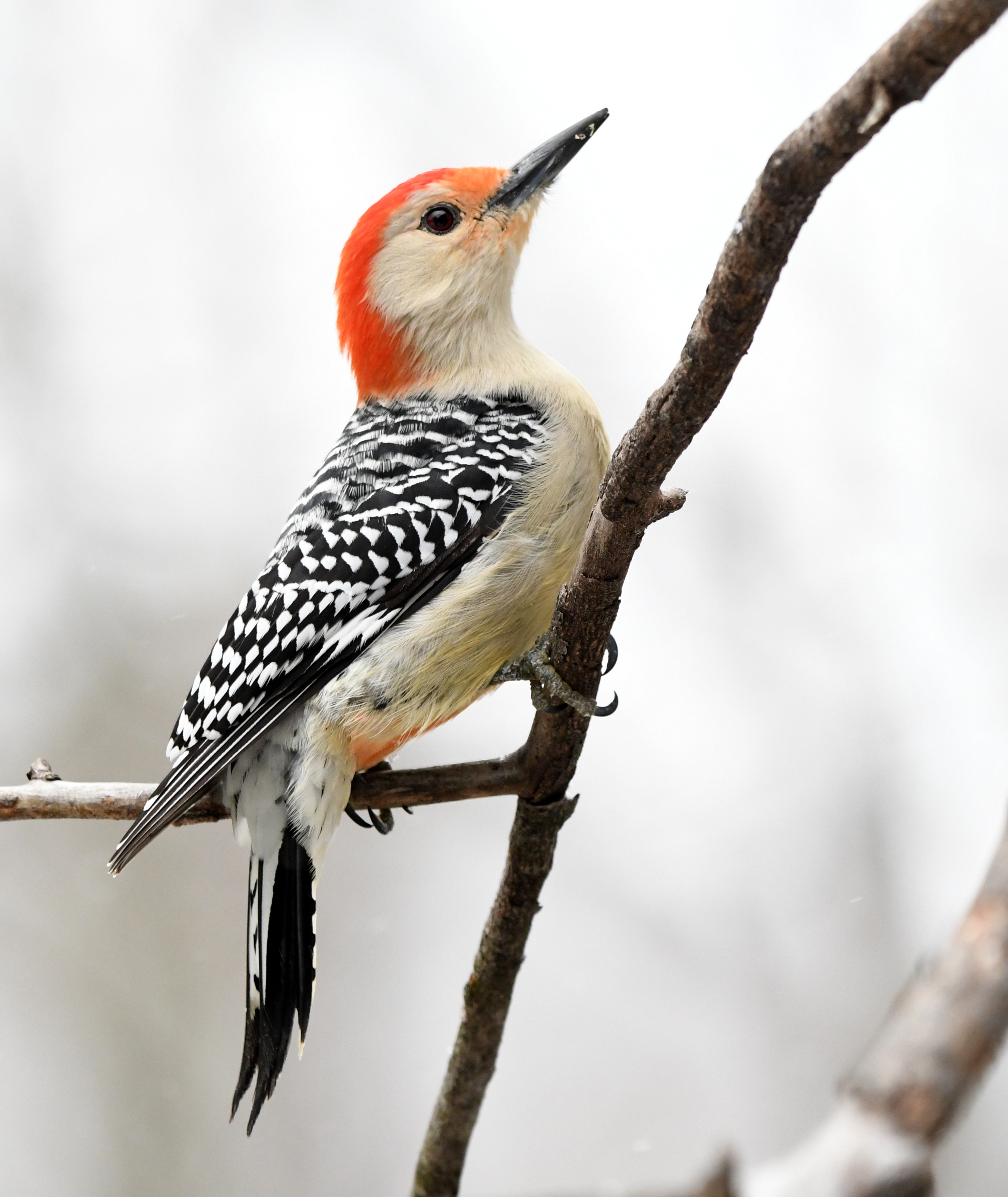
Why is it called a red-bellied woodpecker when it doesn’t have a red belly? You can easily see bright red feathers on the top of its head and the nape of its neck, but not on its belly! Even if the woodpecker is facing you at very close range, you’d be hard pressed to see any red. Why in the world did ornithologists choose that name?
The answer goes back many, many years to a time when it was common practice to work with dead birds in order to study them. With a red-bellied woodpecker in hand, those early ornithologists could easily see a pale red blush on the bird’s belly. And even though the bird they were looking at also had bright red feathers on its head, they couldn’t call it a red-headed woodpecker. That name was already taken by another bird whose entire head was covered in dark red feathers! Ornithologists stuck with the name red-bellied woodpecker and it has forever kept backyard birders confused!
Red-bellied woodpeckers are plentiful in our area and are commonly found where there is a mix of both mature and dead trees. If you live on or near a large wooded lot, you might be able to lure the red-bellies to your backyard feeders by using suet, peanuts, and sunflower seeds. You can also entice them to come to your feeders with cheese, cracked pecans, and raisins. In the summer months, they will also come for sugar water and grape jelly.
When these delightful birds aren’t hanging out at your backyard feeders, look for them in the nearby trees searching for tasty snacks like insects, spiders, millipedes, and mites. With their long, sticky, barbed tongues and chisel-shaped bills, red-bellied woodpeckers are particularly well-suited for extracting prey from the crevices of trees. They also like to push nuts back into those crevices for later consumption.
In late winter through early spring, red-bellied woodpeckers pair off and begin their breeding activities. Male woodpeckers get the ball rolling by drumming on a hollow tree to attract a female’s attention. He may even try drumming on your aluminum gutters, the hood of your car, or the tin roof on your backyard shed. Woodpeckers love any sound that resonates! When a female accepts the male’s offer, she will tap along with him for a little while until they both settle down to excavate a nest cavity and raise a family.
Once their nest is established, the female will lay about four eggs. Both parents will then take turns incubating the eggs until they hatch about 12 days later. Both parents also share responsibility for feeding their chicks. Even after their offspring learn to fly, both parents continue feeding them and helping them learn to forage until they are about 10 weeks of age. At that time, mom and dad totally cut the apron strings and leave the kids to fend for themselves!
Red-bellied woodpeckers depend on dead and dying trees for both foraging and nesting. When property owners clear dead trees and limbs, it greatly reduces the number of nesting locations and food sources for these birds. By leaving dead trees, or “snags,” on their property, homeowners not only help the red-bellied woodpecker thrive, they also help all the other species that depend on the woodpecker’s abandoned tree cavities for shelter, including bluebirds, wrens, chickadees, titmice, squirrels, and bats.
I was surprised to learn just how important red-bellied woodpeckers are for controlling large populations of insects and other critters that we often consider pests, including ants, flies, grasshoppers, beetle larvae and caterpillars. Most importantly, the red-bellied woodpecker is a major predator of the invasive emerald ash borer. Since it was first discovered in Michigan in 2002, the emerald ash borer has killed more than 40 million ash trees in our state! This is an amazingly high number of trees given the fact that an adult ash borer beetle can only fly about ½ mile. The damage spread quickly because humans unwittingly transported infested campfire wood from one location to another throughout the state.
To help encourage the red-bellied woodpecker thrive in your area, leave dead trees standing when it’s safe to do so, and stock your feeders with lots of suet, sunflower seeds, and peanuts!
Hopefully, the redbellies will come!