

By Danna Downing
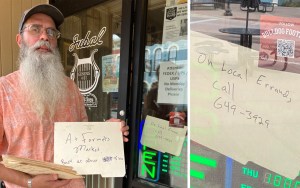
Working for the common good is rewarding and gives life meaning. Doing good manifests itself in many forms. Last month I shared a story about helping a young man find shelter by connecting him to emergency assistance resources. It was an exercise in saving one starfish at a time, as they say. It meant a lot to the two of us but may not have caused big ripples of good in the world. When we work in a group setting to create a system of sustainable services, with access for many individuals and families in need, there is a different kind of commitment and payoff involved.
Last month, I shared that I was reading a book called The Power of the Social Brain, co-edited by Pat Wilson O’Leary, a local educator. The research cited in this book merits sharing. In Chapter 9, Robert J. Garmston shares three premises based on research done by Anita Wooley (Carnegie Mellon) and others, that support developing smarter workgroups.
The three premises are: Collective intelligence is real and measurable; groups are living things; and group intelligence depends on group process. Simply stated, what makes a group smart or great is not dependent on each member having a high IQ (Intelligence Quotient). Group Intelligence depends more on having members who listen to each other, share criticism constructively, and have open minds.
The greater the social sensitivity of group members and the more turn-taking during discussions, the better the group performs. A smart group has its own personality that is more than and/or different from the personality of each member of the group; hence the need for group diversity. And, when a group develops a group process that fosters this kind of group evolution, every member of the group benefits and every recipient of services the group develops also benefits.
In retirement, I have had the privilege to serve on the Generous Hands board for the last several years to help create and deliver critical services to families with children. I have worked with many groups over my lifetime and have found this group to be very positive, enthusiastic, generous, and effective in making a difference in our community.
One of the important goals of this group is to regularly offer board development opportunities. I happened to casually share some of the concepts in The Power of the Social Brain with Sheri Louis, the director of Generous Hands.
Her board has invited Pat Wilson O’Leary to an upcoming board meeting to brainstorm about how their group can build upon their many successes by helping each board member understand the power of what Generous Hands currently does and build on that power to serve to our community in new ways. It is a worthwhile exercise for any group, and I look forward to participating.
We are fortunate to have many groups in our community tending the common good. Let’s give them whatever we are able to assist them in their wonderful work.