


By Kathy Oswalt-Forsythe
Many of us look to the holiday season and its celebrations with both excitement and apprehension: It’s a complicated, emotional mix.
As children, our holidays were full of many traditions, including sharing delicious meals, attending many church services, anticipating the arrival of Santa, and making holiday treats.
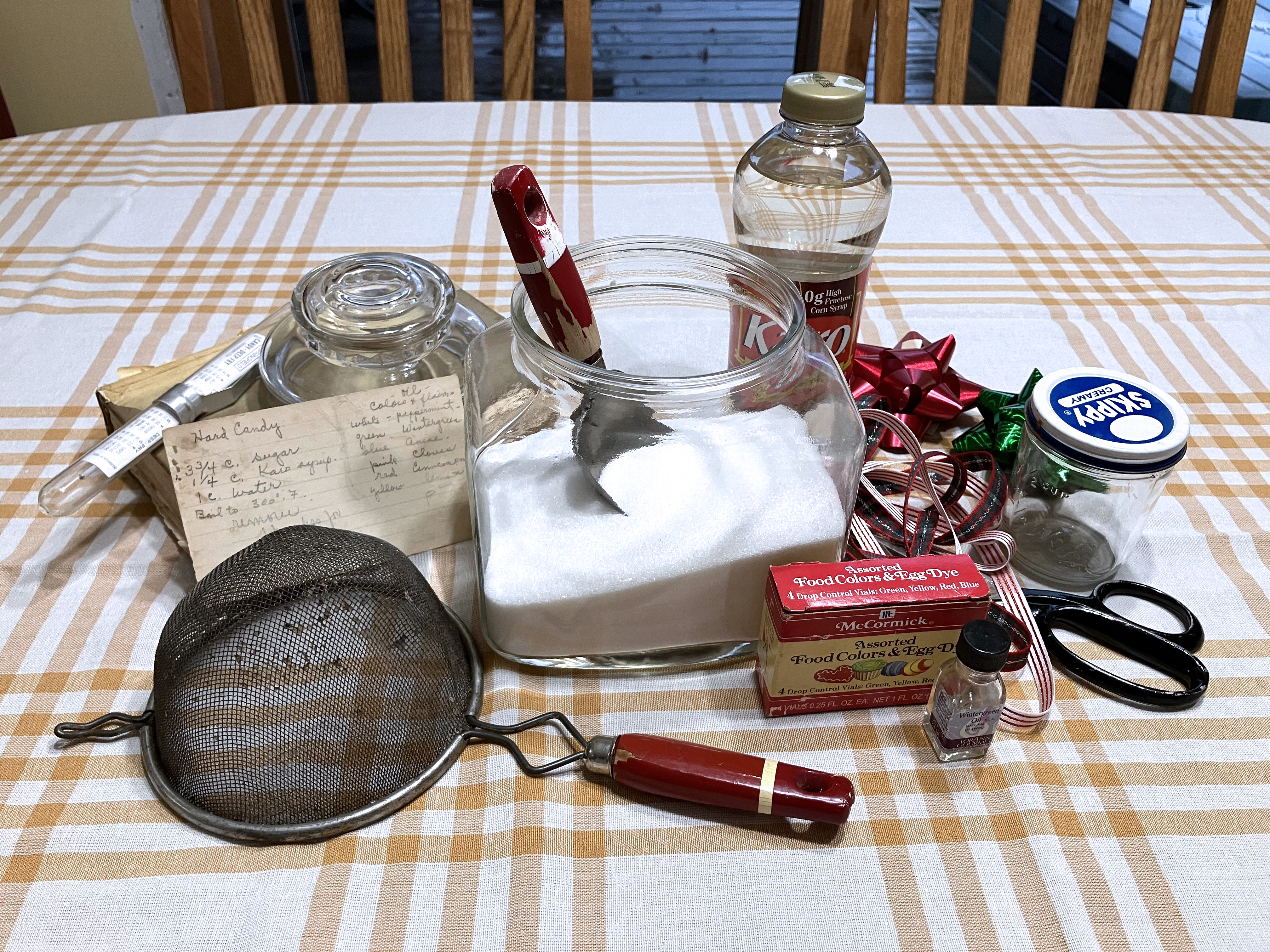
My mother and grandmother made Christmas candy every year—their version of “rock candy.”
It’s a hard candy whose scent permeated the house for a week after an afternoon of cooking. The flavors were intense: wintergreen, peppermint, cinnamon, anise, and clove. And each flavor was a different color: green, white, red, purple, or yellow.
Our matriarchs boiled Karo syrup, water, and granulated sugar, stirring and checking the candy’s progress until the bubbling mixture reached “300 degrees, exactly!” Mom then added the flavor and color, stirred it in, and then carefully poured the hot, fragrant goo onto cookie sheets which they had covered with a thick layer of powdered sugar. Once leveled to the candy-queen’s satisfaction, Grandma then covered the dangerously hot mixture with another layer of powdered sugar. When Grandma’s fingers could tolerate the heat, she began cutting the candy into little pillow-shaped nuggets.
Once we could manage a big pair of those old, black-handled scissors, we were enlisted, and we snipped the cooling candy as quickly as we could.
It was a well-practiced process. Once cooled, the candies—coated with powdered sugar—were sifted and placed in a big bowl, the powdered sugar was reused and spread on the cookie sheets, and our mom started another batch with a different flavor.
Like tiny jewels, the cooled candies were eventually mixed together and divided into various sized jars. Bus drivers, teachers, milkmen, postal carriers and neighbors all received a jar full of these delicious gems.
Most families during this time gifted something similar. Simple presents of appreciation.
Tokens of love.
As adults, we pressure ourselves with expectations of perfect gatherings, displaying a beautifully decorated tree, securing and purchasing amazing gifts for our loved ones. All worthy of a Hallmark movie.
Of course, nothing is perfect. We do know that, but it doesn’t lessen our self-inflicted pressure to match our memories which, of course, have grown more precious over the years.
When our children were small, we planned carefully for gift giving, figuring out how to stretch our limited budget to provide each child’s most desired toy while maintaining a sense of fairness come present-opening-time. This was a joyful task for us. Their presents weren’t extravagant, but come Christmas morning, we felt like the richest parents on earth.
Our gift giving has now become more symbolic.
Our grandchildren, of course, will receive some surprises, and Santa still fills the stockings at our house, but gifts to extended family and friends are more simple: homemade peanut clusters for our brothers, baskets or bags of some goodies for long-time neighbors, a vintage ornament or earrings for girlfriends.
Like the homemade candy of our childhood, these things don’t take lots of money—they just take time. And thought. And follow-through.
Tokens of love.
It’s a Fine Life