

This is the second in a series of articles about Dr. Nathan Thomas.
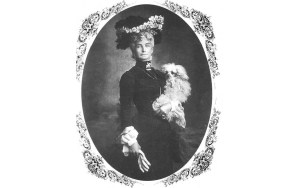
Dr. Nathan Thomas was one of the first doctors in western Michigan, arriving in 1830. He and his wife, Pamela, built a home in Schoolcraft in 1840. They had 4 children between 1842 and 1857. Their home was a station on the Underground Railroad. It was their strong Quaker faith that led them to help runaway slaves despite the risk of imprisonment and fines.
Pamela writes, “His (Nathan’s) antislavery views were so well known that while a bachelor boarding at the hotel, fugitives from slavery had called for assistance and protection on their way to the Queen’s Dominion (Canada) and freedom.”
After marrying Nathan in 1840, she reports fugitive slaves came singly or in twos or threes. She writes of one woman: “She told me what some women had to endure from cruel licentious masters.”
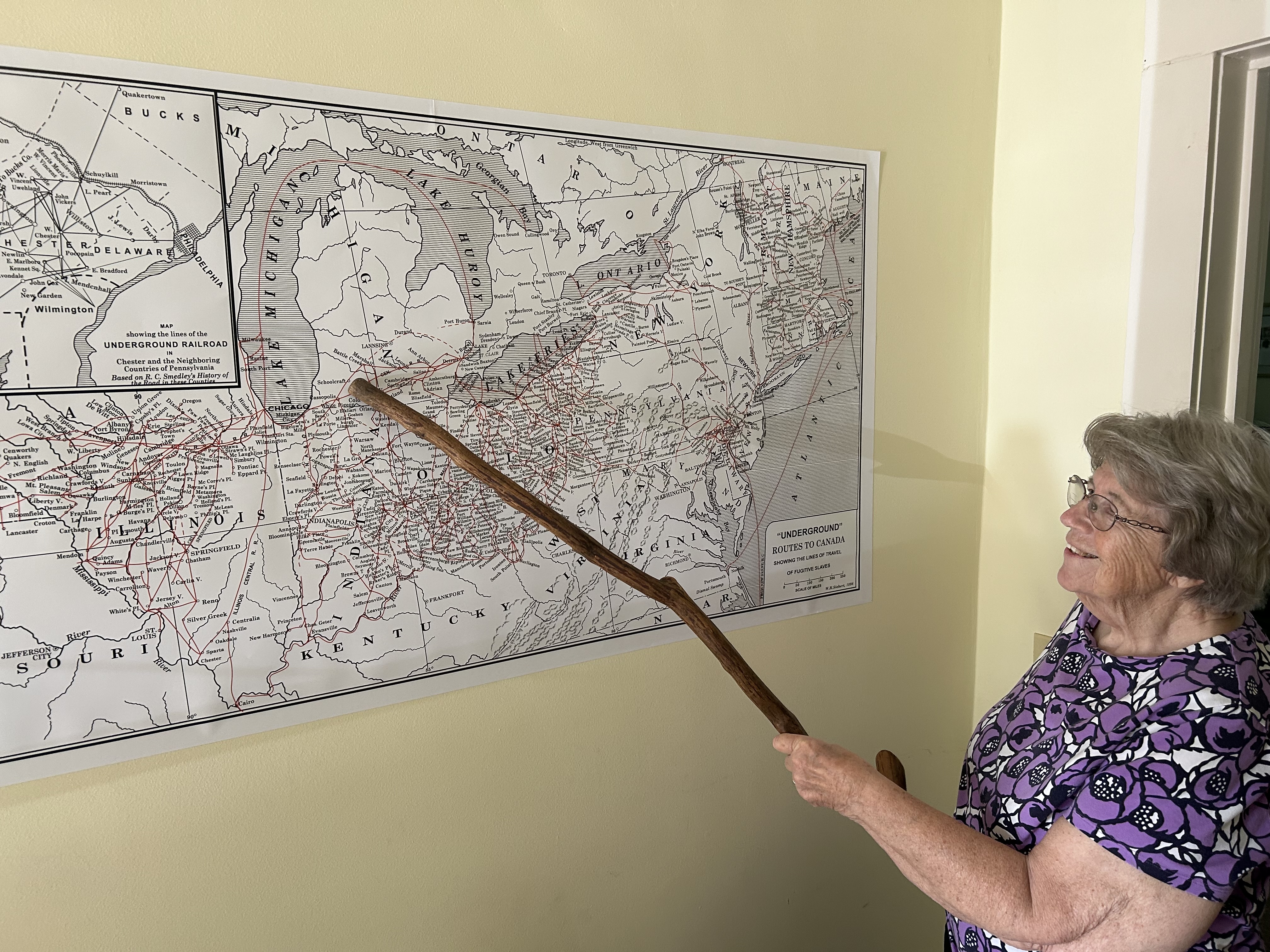
In 1843 they agreed to be a stop on the Underground Railroad. Runaway slaves stayed with Zachariah Shugart, a Quaker in Cass County, were then delivered to the Thomases in Schoolcraft, then taken to Erastus Hussey, also a Quaker, in Battle Creek. They continued east to Canada. Now fugitives came in groups of 6-12.
“This brought much hard work to me and great expense to my husband. Often after the little ones were asleep and I thought the labor of the day was over, Friend Shugart would drive up with a load of hungry people to be fed and housed.”
Prior to 1850, free states were not obligated to return fugitive slaves, but with the passage of the Fugitive Slave Act of 1850, it became a crime to aid runaway slaves. Anyone aiding a slave could be subject to imprisonment or a fine up to $1,000 (equivalent to over $30,000 now). Several Quakers in Cass county lost their farms because of their actions. Pamela Thomas reports they continued to help slaves despite the risk because of Jesus’s teaching: “Even as you have done it to the least of these you have done it to me.”
After 1850 the volume of fugitive slaves seeking refuge increased. Over about 20 years, the Thomases estimate they helped 1,000-1,500 runaway slaves find freedom.
Dr. Thomas was also involved politically. He ran for lieutenant governor in 1845 as a member of the Free Soil Party, a party advocating that all territories and new states should be free of slavery. He was a delegate in 1854 in Jackson, Michigan when the Republican Party was formed absorbing the Free Soil party.
After the Civil War, the Thomases were visited by George Harris, a former runaway slave who had stayed at their home on his way to freedom. After his escape he went to Boston where he joined a Negro regiment in the Union Army. His unit was involved in the capture of Charleston. He told them there were several other soldiers in his unit who had also stayed with the Thomases. He told Dr. Thomas, “Doctor, that is how you helped take Charleston.”