


Bee balm.
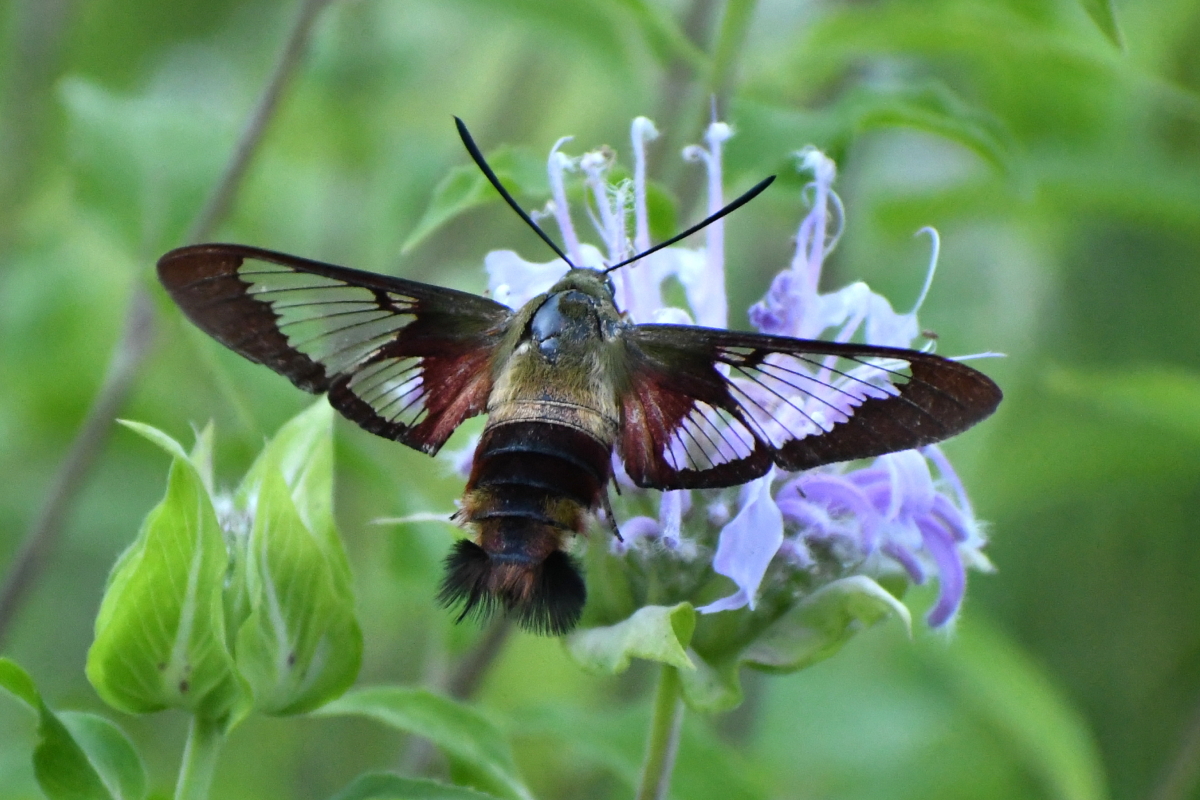
I’ve been taking pictures of the birds, the bees, and the butterflies for many years now and the plant that these creatures seem to love most is bee balm! My favorite bee balm insect happens to be the hummingbird clearwing moth. Whenever I see bee balm out in the wild, I have my camera ready with a fast shutter speed hoping to catch one of these fascinating little insects with its transparent wings and uncanny resemblance to both a bee and a hummingbird (see South County News article, September 2022).
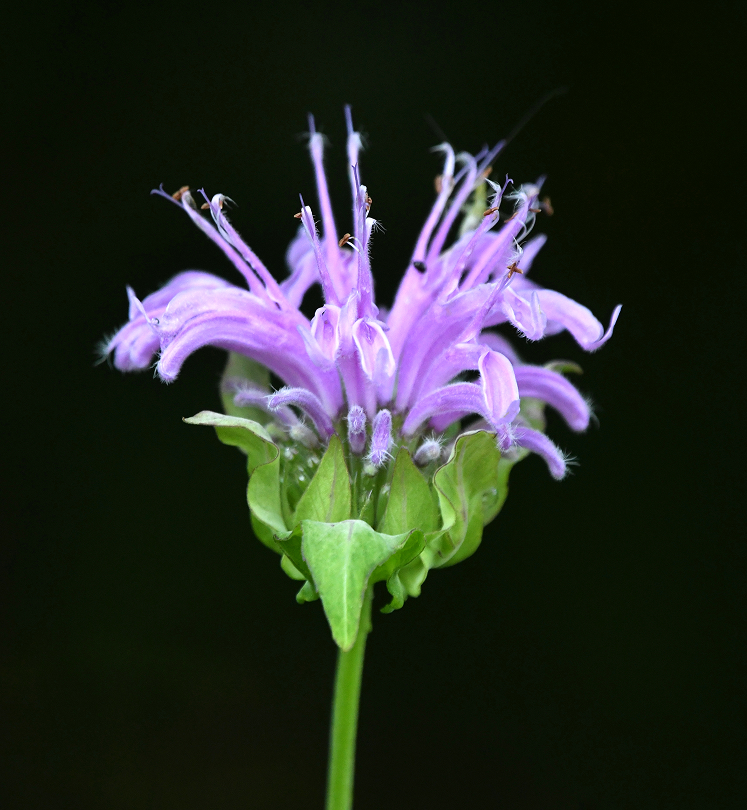
Wild bee balm (monarda fistulosa), commonly known as wild bergamot, is a beautiful lavender-colored plant that I see almost everywhere I ramble through sunny, wide-open fields. In Michigan, wild bee balm blooms from June through September. You’ll still find it this time of year, but it’s fading fast.
Even though bee balm is sometimes called “wild bergamot,” it’s not used in Earl Grey “bergamot” tea, which is actually made with oils extracted from the rind of the bergamot orange. Bee balm earned the name “wild bergamot” from its leaves and flowers that have a fragrance similar to that of the bergamot orange. This similarity led early plant collectors to name wild bee balm after the citrus fruit, but the two plants have nothing in common. Wild bee balm is part of the mint family, and the bergamot orange is part of the citrus family. There is also a domestic form of bee balm known as monarda didyma that is typically grown in gardens.
Wild bee balm and domestic bee balm are both members of the mint family, both attract pollinators (and repel mosquitoes), both smell like oregano when the leaves are rubbed together, both have been used medicinally to treat various ailments, and both can be used to make tea. Domestic bee balm, however, has been cultivated and hybridized and has more vibrant, diverse colors than wild bee balm, with bright red being its most notable color.
The common name of “bee balm” is a reference to its former use as a treatment for bee stings. Native Americans and early colonists used bee balm leaves and flowers to make a wide variety of medicinal salves, poultices, tinctures, and teas. You can still find recipes online or in the literature for making many of these herbal remedies.
The tea that Native Americans and early colonists made from bee balm treated a whole host of conditions including headaches, colic, flatulence, colds, fevers, stomach aches, nosebleeds, insomnia, nausea, menstrual pain, and “heart trouble!” Monarda fistulosa or wild bee balm is one of the most important herbs still used by Native Americans today, continuing a well-honored tradition that dates back centuries.
Bee balm would be a wonderful addition to your pollinator garden. Not only do the birds, bees, and butterflies love it, the white-tailed deer do not! It has a strong minty scent that they tend to avoid unless their preferred food sources are scarce.
If you decide to add bee balm to your flower garden, it can be planted in the spring or the fall; just make sure you choose a spot with at least six hours of full sun or it might succumb to powdery mildew. You can deadhead faded blooms to encourage the plant to re-bloom in late summer, but after the first frost, leave the seed heads alone and the birds will happily feast on your dying plants.
Whether you harvest wild or domestic bee balm, know that both the leaves and the flowers can be used in a multitude of ways. You can use fresh leaves on salads or add them to pesto. Dried leaves can be used as a spice, similar to oregano or thyme, and the edible flowers make a lovely addition to salads, desserts, and drinks. Both the leaves and the flowers can be used to make an herbal tea known as Oswego tea, which has traditionally been used to treat coughs, colds, and stomach issues.
While bee balm is generally considered safe for human consumption, pregnant women should avoid consuming it, especially in tea form, due to potential uterine stimulant properties. Even if pregnancy isn’t a concern, be sure to consult your healthcare provider before using bee balm (or any herbal remedy) for medicinal purposes, especially if you have underlying health conditions or are taking medications.
Just because it’s natural doesn’t mean it’s unconditionally safe.