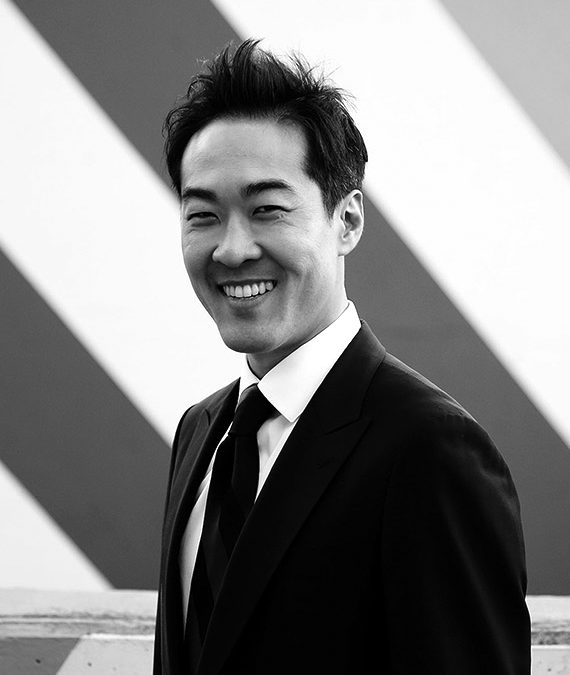
The Irving S. Gilmore International Keyboard Festival will return to Vicksburg High Schools Performing Arts Center April 25 with a performance by Michigan native Alpin Hong – performing with the high school’s band.
Hong debuted with the Kalamazoo Symphony Orchestra at the age of 10. He has since performed and advocated for music education throughout the nation and much of the world.
Free reserved seating is in effect for the 7 p.m. performance. Reservations may be made by visiting http://www.vicksburgcommunityschools.org/pac or by calling the Vicksburg Performing Arts Center ticket office at (269) 321-1193.
Hong’s performances are described as engaging and accessible, grounded in extensive classical training but with a background in extreme sports, martial arts, and video games.
Events at the Performing Arts Center draw from Kalamazoo and St. Joseph counties, as well as from Grand Rapids and Battle Creek. The Center has presented several Gilmore artists, the Kalamazoo Concert Band, the Kalamazoo Symphony Orchestra. Other performers and groups include the Western Jazz Quartet, WMU’s Gold Company, the Acting Company, Vienna Choir Boys, TV and film stars John Astin, Frank Gorshin and Dick Van Patten.
Vicksburg’s first Food Truck Rally of 2022 was deemed a success by event organizers.
Staged March 10 on a closed-off section of Main Street, the rally attracted more than 300 people, according to Alex Lee, Vicksburg’s director of community engagement. Lee was instrumental in organizing the three-hour food fest.
He said it took synchronizing many moving parts to pull off. Aside from strong, cold winds, however, Lee called the event a hit.
The Food Truck concept is a social event the village started in 2019, a time that Lee said, in retrospect, could fairly be considered “the good ol’ days.” With COVID-19 in 2020, the concept was put on hold before returning last summer, when it was staged in a well-spaced format at The Mill, and far enough from what was then a torn-up downtown.
“The first one we had was probably the easiest because there was no construction, no destruction, it was a beautiful summer evening and live entertainment on the street,” Lee said. “Since then, there have been a number of challenges and the Food Truck Rally moved out to The Mill for about four or five events. But it’s great to be back downtown tonight for our second time, and first with the new streetscape.”
Lee said the village plans a number of events on Main Street this summer, including a farmers’ market (in late July), the grand opening of Oswalt Park and other signature events still being put together.
Lee said he is fortunate to organize such events in a community that embraces social gatherings.
“People enjoy having things come here, they always turn out and they’re friendly about it,” he said. “I’ve organized things in other cities, where it creates a bit of a parking inconvenience and some short tempers, but not here.”
Vicksburg residents Hunter and Sarah Van said they found out about the one-night event through Facebook and knew they would be in attendance, no matter what.
“Well, we knew there would be some good food here and we weren’t disappointed,” he said. “The Pig Mac from the BBQ place is excellent. It’s pulled pork and mac and cheese, and it’s really good.”
Participating vendors were Teresa’s Kitchen (authentic Mexican), Weller Barbecue, Blue Plate (comfort foods and dessert), and Ibison Concessions (fair/carnival foods)
Becca Schemberger, program director for KELC Events, lined up the food vendors and said Vicksburg proved to be a great host for the first Food Truck Rally of 2022.
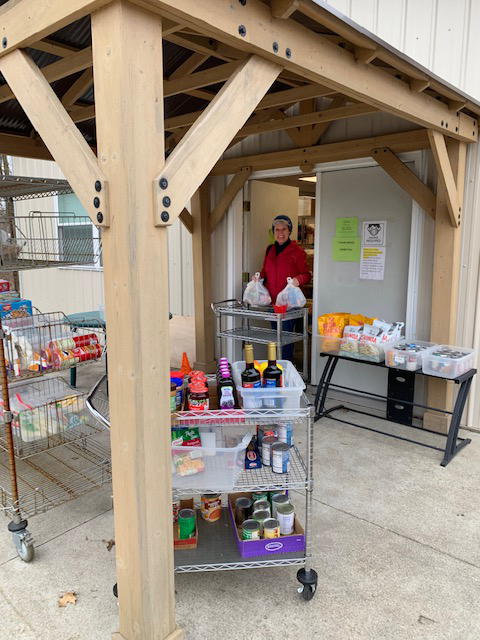
Kay Anderson volunteers with food pickup at the gazebo at Generous Hands.
Despite the challenges of COVID, Generous Hands continues to provide food and Family Fare vouchers for 296 students in 144 families each week. When backpacks of food could not be delivered to school, a gazebo was built in 2020 to allow outside pickup of food at Generous Hands’ Spruce St. location.
This also meant families had access to food even when a child was out of school because of illness or quarantine. Not only was food distribution maintained, it was increased.
The preschool children of GH families were included; so were home-schooled children. GH reached out to help hungry families in Climax Scotts schools. More face-to-face interaction also resulted in closer relationships with recipient families and more coordination of services with South County Community Services. Generous Hands services have expanded to include hygiene products, laundry cards for Pathways students and snacks at all school buildings. Pick up of food occurs on Tuesday, Wednesday and Thursday from 10 a.m.-noon, and 4-6 p.m. on Wednesdays at Generous Hands, 606 Spruce St. “Blessing Boxes” contain food items for pick up at any hour and are located at Generous Hands and Portage Terrace.
What had been delivered just on Fridays in now available Tuesday through Thursday – the name “Friday Packs” no longer fits. Friday Packs have been renamed Power Packs. They’re not just for Fridays anymore.
Editor’s Note: In December 2020, the Vicksburg Foundation commissioned Leeanne Seaver, Vicksburg resident and published author, to write the book, In Support of Community: The History of the Vicksburg Foundation, which highlights the legacy and accomplishments of community leadership. Seaver’s responses follow.
Why did the Vicksburg Foundation decide to do a book?
Rudy Callen, president of the Vicksburg Foundation, put it this way: “In June 2020, I opened our board meeting and looked thoughtfully around the table at the trustees there. These individuals put their heart and soul into community. It seems to go beyond dollars and volunteerism for them. And it dawned on me that three of them were well into their 80s, and one was in his 90s. Vicksburg had just lost an amazing community leader, Sue Moore, a month earlier, and our longstanding Foundation attorney Pete Livingston passed away unexpectedly at age 60 only the week before.
Callen continued: “Well, I’d been a trustee since 2012, and stepped into the Foundation president role after Bill Oswalt stepped down in 2016. My leadership is fairly pragmatic: I can oversee financials, handle prep, build the agenda, facilitate discussions, and follow-up on actions between meetings. But documenting the lived-history and this group’s impact to the community for nearly 80s years is really not my calling—or my story to tell. That prompted an idea.
“Vicksburg loves its history. Understanding the past provides important knowledge for moving forward. I knew somehow the history of the Vicksburg Foundation needed to be documented,” Callen said.
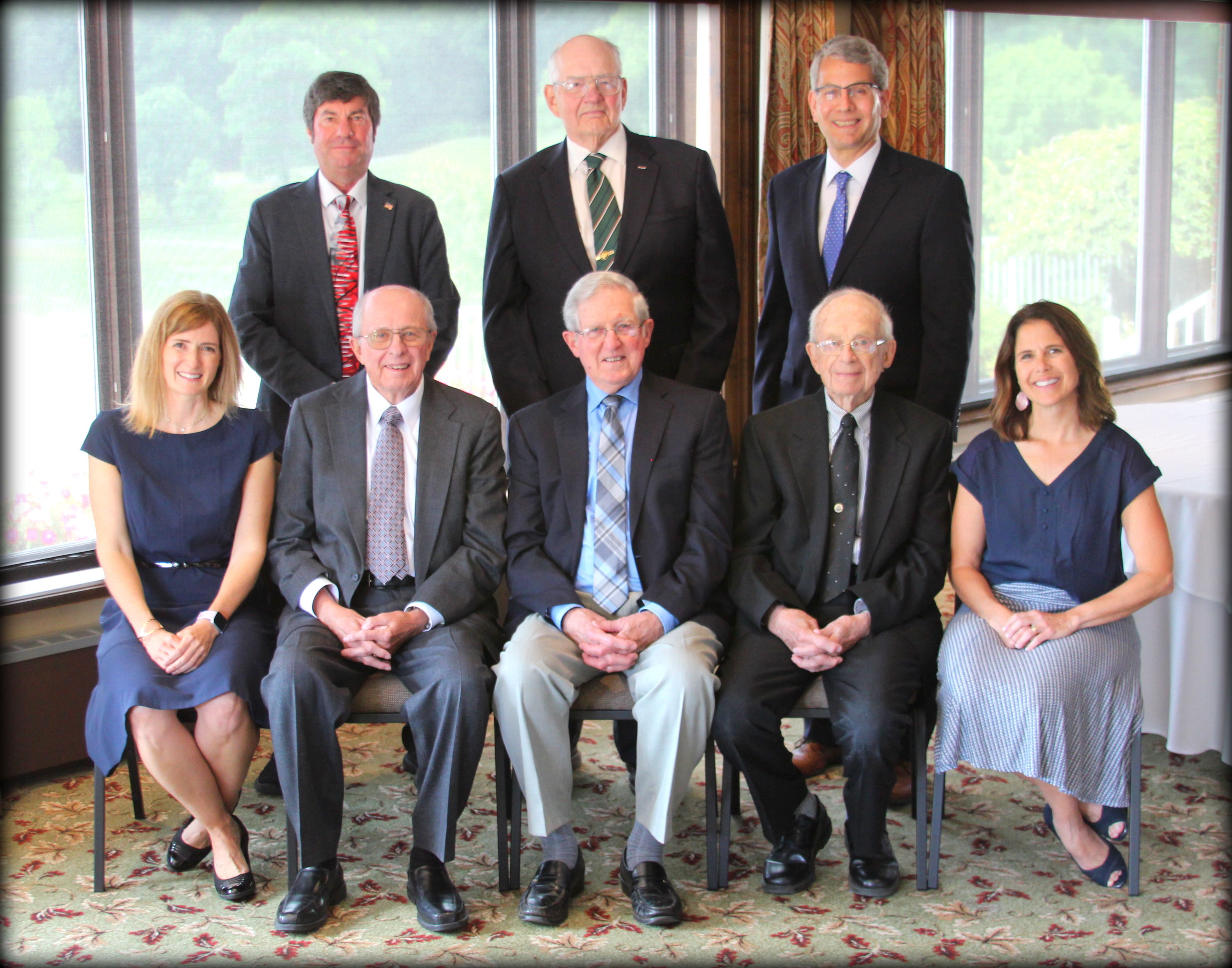
The Vicksburg Foundation Board of Trustees. Back row, from left: Rudy Callen, Warren Lawrence, Dr. David Schriemer. Seated: Dr. Katie Grossman, Jim Shaw, Bill Oswalt, Dr. Lloyd Appell, Amie McCaw.
How did you approach writing this book?
To tell this story in context to the community is what made this book commission so interesting to me. The Vicksburg Foundation could have just produced a glorified annual report – chronicling millions of dollars distributed since 1943 when it was initially established by the Lee Paper Company. But the trustees gave me a lot of freedom, so I explored the relationship of the Foundation with the community it serves. That was challenging because the Foundation has always remained off-stage so the spotlight remains on the organizations it supports. Lots of people will be surprised to learn there is a such thing as the Vicksburg Foundation, and that it has had a significant hand in virtually everything related to the quality of life we enjoy here. Yet it’s comprised of regular people we all know. I loved hearing the trustees talk about being in Showboat or their great grandparents coming to this country to work at the old paper mill or the faith they have in this community.
The Foundation is not an exclusive club that meets in some ivory tower, it’s a group of leaders who’ve been willing to take on the mantle of responsibility without compensation or credit. The trustees are people whose commitment to this community help ensure South Kalamazoo County not only survive the same hard times that have shuttered other small towns, but actually thrive.
Did anything surprise you as you researched the history of the Foundation?
The stories unfolded in the most fascinating way. It wasn’t just how helpful the financial support has been, particularly during the pandemic, but the integrity of leadership that’s characterized the Foundation from the beginning. For example, that little open block of downtown that I’ve always known is “Oswalt Park” was named after one of the early Foundation trustees, Ferris “Uncle Jimmy” Oswalt. I didn’t know that the Foundation provided funds to help make that park possible. And I didn’t know that during World War II, “Uncle Jimmy” was Major F.H. Oswalt who commanded a battalion of “colored troops” in the North African campaign to drive back Rommel. As I interviewed his grandson Gary Hallam, we both pondered how a farm kid from Vicksburg came to that role in history. Gary says that story has been lost to time, but “Most likely it was because my grandfather saw the worth of a man in his intent and actions, and not by the color of his skin.”
As someone who grew up in Vicksburg, how did it feel to write a book about your hometown?
It was intimidating but enlightening. I moved out of Michigan right after high school graduation at a time when “Last one out of the state, turn off the lights” was a common bumper sticker. When I moved back a few years ago, I was like, “Oh man, the Tastee Freeze closed!” But there was Apple Knockers, a sophisticated performing arts center in the high school, a bike trail, festivals at the historical village, and the old boarded-up train station was now the Depot Museum.
Plus, the derelict paper mill was rising again like a phoenix from the ashes. I learned that the entrepreneur behind that endeavor is a local son whose ancestor, Joel Clark, was here at the same time “Honest John” Vickers was getting his mill going back in 1830. The Clark family stuck around these parts—in fact, our newspaper publisher, the late Sue Clark Moore, descended from Joel Clark. Her son Chris Moore is the mastermind who’s revving up the Mill that long sustained the economy of this area. The Foundation had an important role in securing that abandoned structure and property for the Village of Vicksburg in 2013, and Moore has leveraged that into a whole new, robust life with Paper City, LLC. That backstory is in this book.
I feel incredibly proud of my hometown, and so privileged to bring to light the part the Vicksburg Foundation has played in continuously improving the quality of life here.
When and where will the book be available?
Editor’s Note: If all goes as planned, In Support of Community: The History of the Vicksburg Foundation will be published in early May. It will be available in our libraries in Vicksburg and Schoolcraft, and for purchase on Amazon. We will provide an update in the next issue of the South County News with more information about all of this—including places where the book may be purchased locally. The Foundation isn’t interested in profiting from sales but in trying to ensure that this book will be accessible to anyone who wants one. Considering how many people in this community are part of this story, that’s a very important goal.
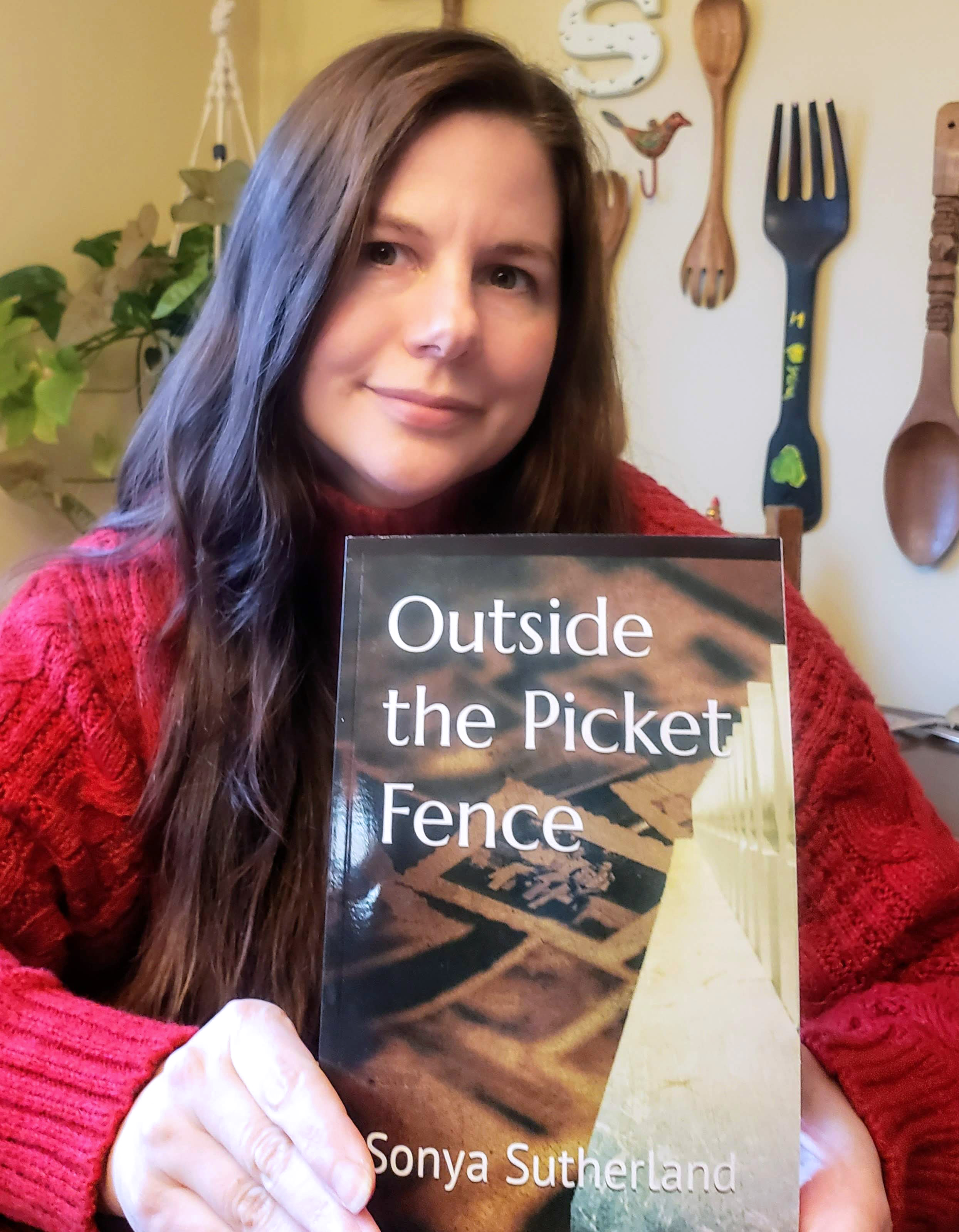
After seven years of generating ideas, writing, researching and revising, Vicksburg resident Sonja Sutherland has published her first novel: Outside the Picket Fence.
Sutherland came up with the idea for the book while working as a home-based occupational therapist. She worked with a patient who lived in a group home and had dementia. Sutherland explains that every time she worked with the patient, the woman would ask about going home. The staff always reminded her that she was home. Sutherland’s client could provide many details of other homes she lived in and often described her childhood home. Sutherland says, “It made sense that waking up every day in a place that holds no memories for you would make you assume you didn’t live there.”
So, the idea for the book was to try to imagine what it might be like to have to pull clues from the present and mix them with the memories that are available, while both the present and the memories keep changing. Sutherland believes that might be what it is like to have dementia, and she “also wanted to show that the people I had been working with had interesting and valuable stories, sometimes hiding just behind their confusion.”
About seven years ago Sutherland started conducting extensive research and began writing. At that time, she wasn’t sure where it was going to end up. She carved out some “me time.” Her children were young at that time and having something personal to work on was nice.
She began by writing a short story about the beginning stages of dementia, wasn’t sure what to do with it, and entered it in the Tournament of Writers competition in 2018. Sutherland was nervous about how it would be received. “I don’t think I had let anyone read any of my writing yet,” says Sutherland, “but I ended up being a grand prize winner.”
She found the judges’ comments helpful and used their suggestions and the experience as a launching point and motivator, next focusing on a novel.
Sutherland wrote a good portion of the first draft in the Vicksburg District Library. She carved out a few hours on Tuesday evenings when she and her husband planned she would be gone in the evening. She would bring her laptop and work in the back corner of the library. Outside of that, she worked to find additional time to write.
She rewrote the novel at least twice, then went through the editing process several times. Sutherland says she had some great first readers.
Sutherland decided to go ahead and publish the book this year, saying, “I just really thought it should be out there, in case it was helpful for anyone.”
For more information about Sutherland and Outside the Picket Fence, visit: amazon.com/Outside-Picket-Fence-Sonya-Sutherland/dp/B09QNX2LM9