


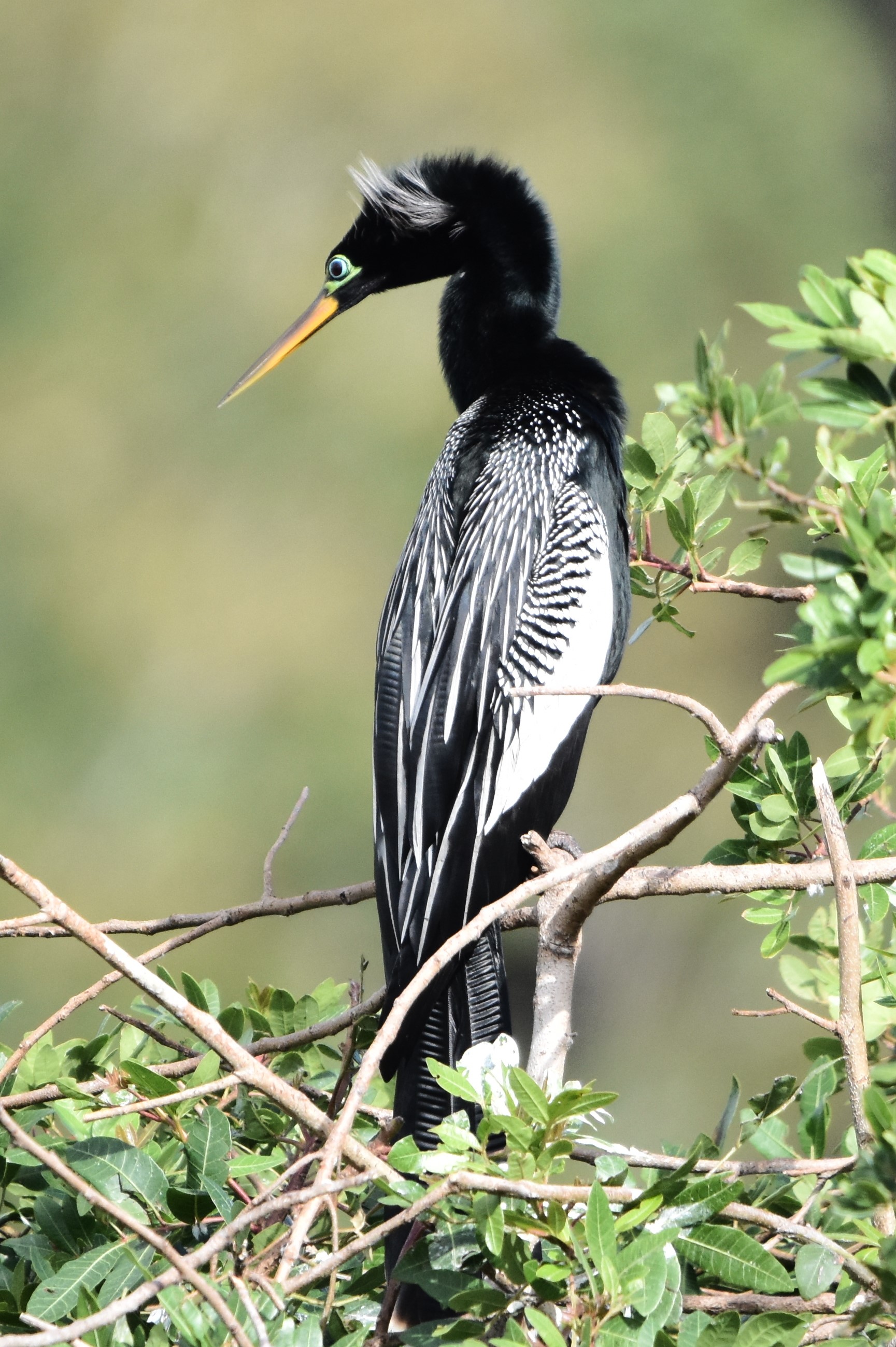
While spending time in Florida this winter, I’ve been looking for birds that are common to Florida, but rare in Michigan. The anhinga fits that bill—but just barely. According to the Michigan Bird Records Committee, there may have been four sightings in Michigan, but only two have been confirmed. One confirmed sighting occurred on September 18, 2005 at Lake Erie Metropark located in Wayne County, and the other took place on May 2, 2015 at Portage Bay in Delta County. The anhinga is a year-round resident in Florida and rarely ventures much farther north. Finding one in Michigan is an extremely odd event!
The name anhinga comes from the Tupi Indians in Brazil, and means “devil bird” or “evil spirit of the woods.” The anhinga has also been called a water turkey and a snake bird. The water turkey nickname refers to its long, fanlike tail that resembles the tail on a turkey. The snake bird moniker refers to the way the anhinga swims with its head and neck above the surface of the water and its body submerged, giving it the appearance of a snake about to strike while gliding stealthily through the water. This sneaky, snake-like behavior is also the reason why the anhinga was originally called a “devil bird.” Interestingly, the anhinga swims lower in the water than most other birds due to its reduced buoyancy—a result of its waterlogged feathers and dense bones. Sometimes, all you can see is its beak!
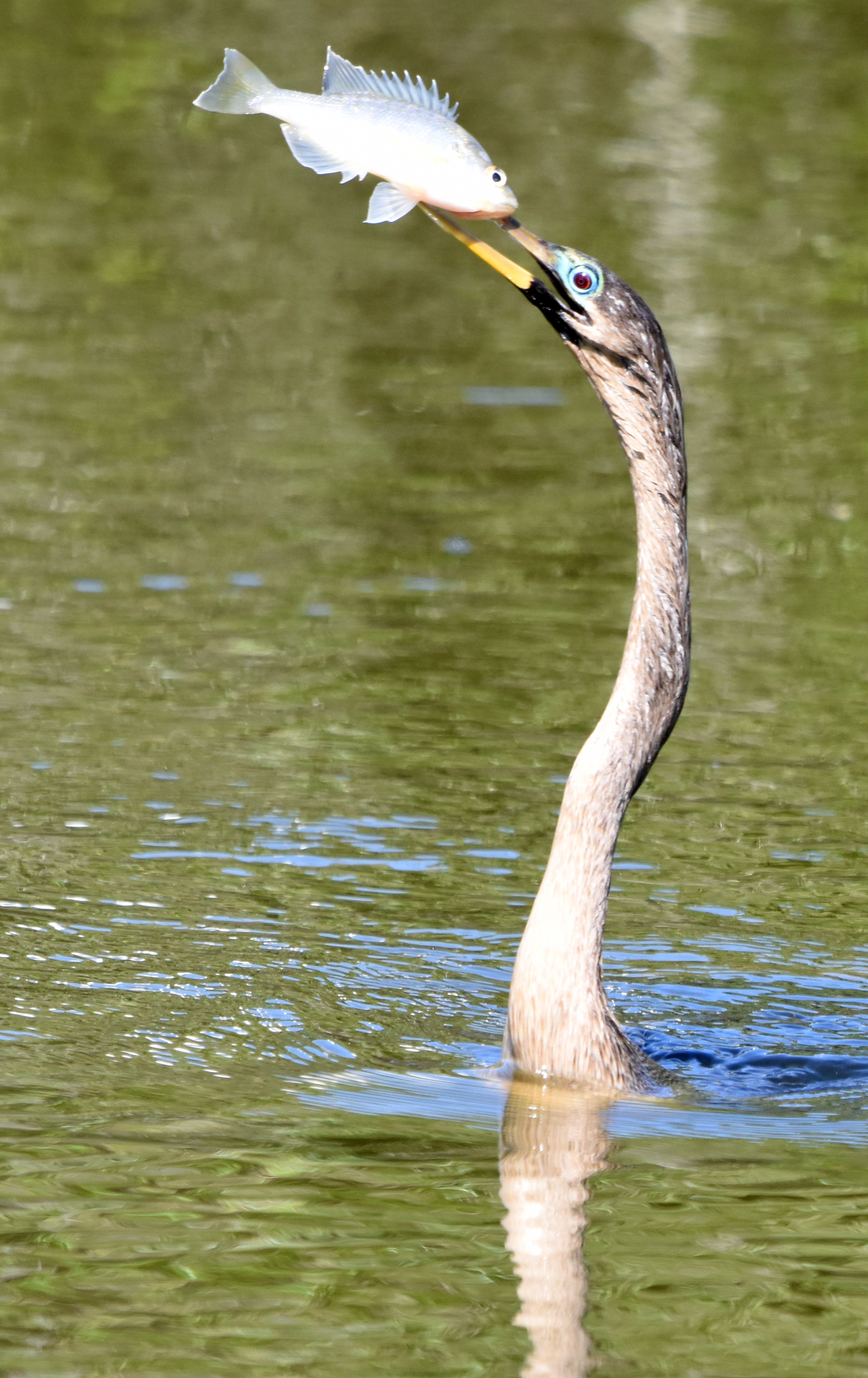
Unlike most other waterbirds, the anhinga doesn’t have waterproof feathers. This may seem like a disadvantage for its aquatic lifestyle, but wet feathers and dense bones help the anhinga slowly submerge its body so it can more easily stalk fish and other small prey which it will ultimately spear with its sharp, slender beak. The anhinga can dive 60 feet below the surface and stay submerged for about a minute. Once it spears its prey, the anhinga re-emerges from the water to flip the fish into the air and catch it head first to swallow. If the fish is particularly large, the anhinga will whack it to death against a rock or a tree limb before attempting to swallow it whole. This can be a long, tedious process.
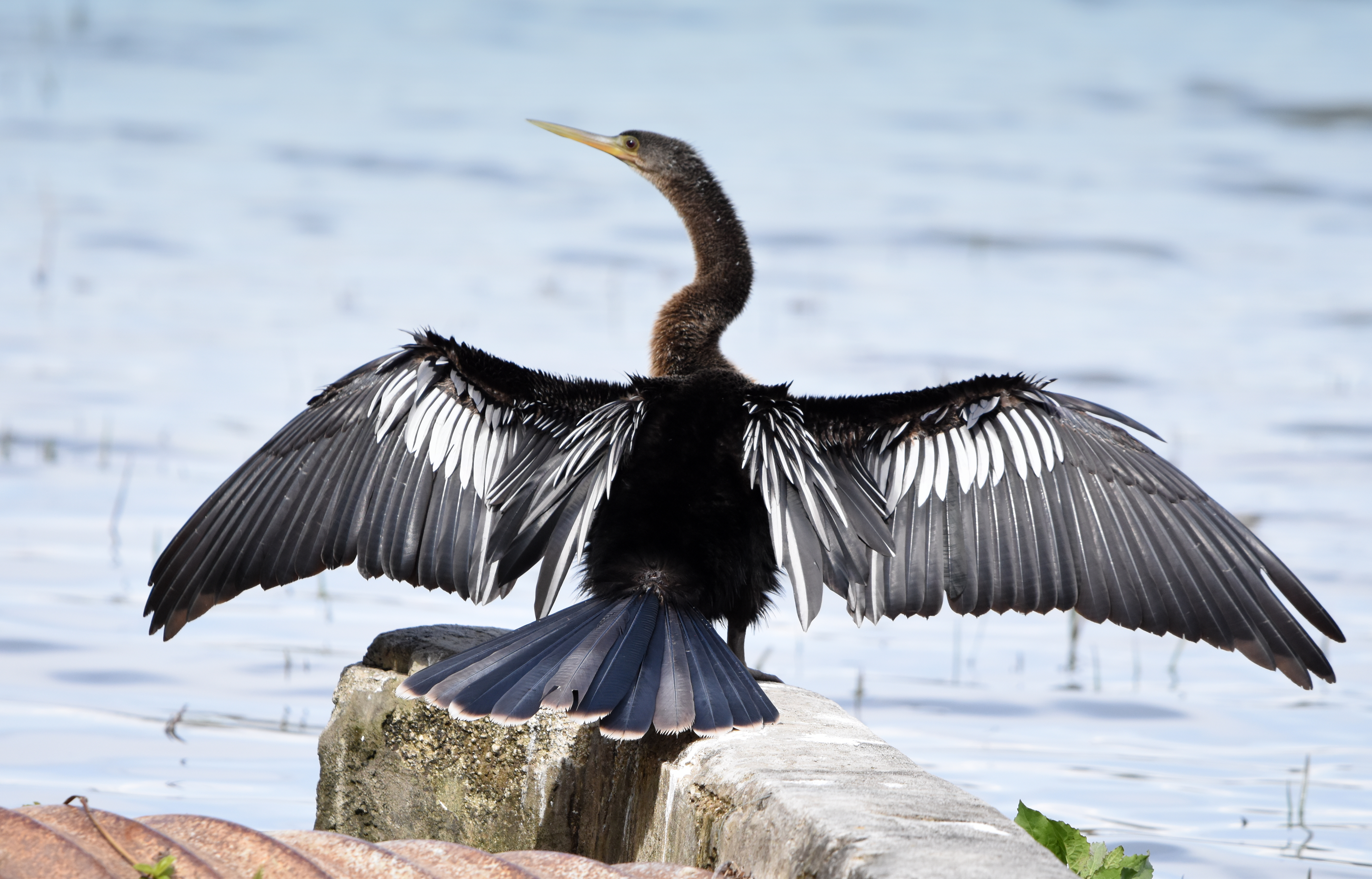
Once the anhinga has a belly full of fish, it will find a nearby spot to spread its beautiful silvery wings and dry its waterlogged feathers. In places where anhingas are abundant, like Florida, you can easily spot them along the banks of a pond or in a nearby tree with their wings outstretched and their backs to the sun. This spread-wing posture serves to both dry out their wings and warm up their bodies. The anhinga has a very low metabolic rate and a high rate of body-heat loss so it depends on the sun to stay warm. Once its feathers are dry, the anhinga will take flight, soaring high overhead on thermals with its neck and tail extended straight out and its wings spread wide, looking very much like a flying cross.
If you ever find yourself in anhinga territory, and you see a black cross flying overhead, you can impress your friends with your astute bird identification skills by casually declaring, “Oh look! There goes an anhinga!”