

San Diego is the oldest European settlement in southern California.
The native Kumeyaay people were the original inhabitants and for over 10,000 years, they thrived as horticulturists, hunters, and gatherers. They were the first to encounter Europeans when the Juan Rodriguez Cabrillo expedition sailed into San Diego Harbor in 1542.
In the 1820s the town of San Diego began to grow at the base of a bluff in what is now Old Town and the Old Town San Diego State Historic Park.
When California was admitted to the United States in 1850, San Diego (still largely limited to the Old Town area) was made the seat of government of San Diego County, though the town’s population was only 650.
The Old Town area remained the heart of the city of San Diego until the 1860s, when a newcomer to San Diego named Alonzo Horton began to promote development at the site of present-day downtown San Diego. Residents and businesses quickly abandoned “Old Town” for Horton’s “New Town” because of New Town’s proximity to shipping.
I first visited San Diego in the summer of 1980 while on a two-month trip across the country after graduating from WMU. I camped, stayed on friends’ couches and in San Diego, stayed in a small apartment near the naval base, with a Navy friend of my brother.
I remember getting off a bus from LA late at night near a park, packed with Hari Krishnas. I spent a week wandering the city, going to the zoo and to Tijuana, Mexico.
Last year and 45 years after my last visit, Jackie and I flew into San Diego for her nephew’s wedding near Fallbrook, about 1½ hours north of San Diego in the mountains. The wedding took place up a winding, steep hill in the mountains. The town of Fallbrook has a handful of great shops, art galleries and classic theater, with a local talent show the day we were there.
We hiked one morning before it got too hot at the gorgeous Santa Margarita River Trail. The trails along the river were well marked and we met two very friendly rangers.
A drive to the beach town of Oceanside made a fun day trip. Hundreds of folks were walking the famous pier, fishing, painting, and a few brave souls jumping off it. The pier was originally built in 1888 and has been restructured several times since. A fire in 2024 destroyed Ruby’s Diner at the end of the pier.
After the wedding we drove to San Diego and our lodging in Old Town, with the streets lined with historic buildings, fun stores and restaurants. We loved the Olde Town Mexican Cafe and sat outside for dinner at the two-story building, packed with a few hundred people.
One day, Jackie and I walked several miles up in the hills above Old Town. admiring the gorgeous mansions and the view of the ocean.
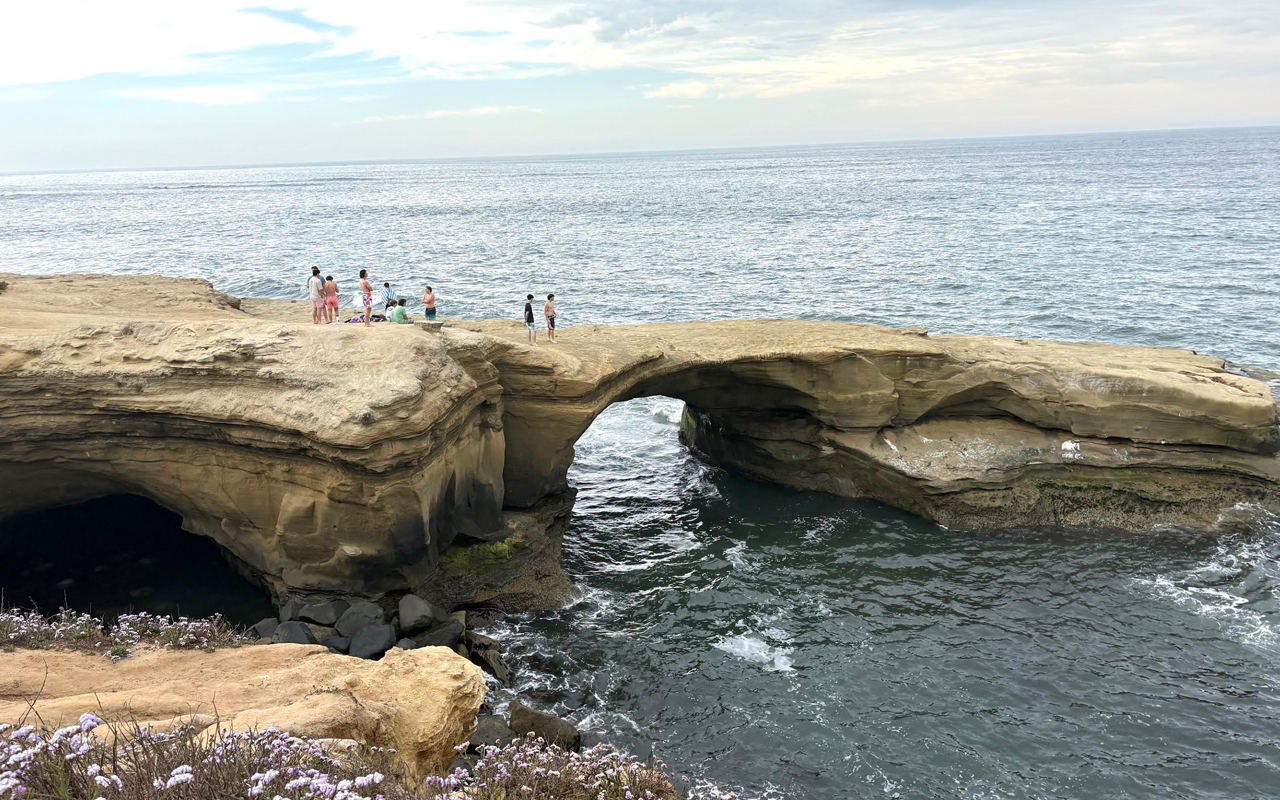
A day trip to the nearby Sunset Cliffs Natural Park was one of the highlights of the trip with its rocky cliffs and caves down below, accessible at low tide. We took steep cement stairs down to the shore at high tide and were able to walk in one cave and watch the surfers in the choppy waters. We met a couple in their later sixties climbing out of the water after surfing and watched brave teenagers jumping off the cliffs into the ocean.
Ocean Beach is just north of here with streets lined with cool stores and bars. We had a beer at Kilowatt Brewing, with its interior walls adorned with black light posters.
Balboa Park was another one of the highlights of our trip. The 1,200-acre historic urban cultural park is one of the oldest in the United States dedicated to public recreational use. The park hosts various museums, theaters, restaurants, and the San Diego Zoo. Entrance to the park is free but some of the museums have an admission fee including the Museum of Photographic Arts, San Diego Air & Space Museum, San Diego Automotive Museum, San Diego Model Railroad Museum, the San Diego Museum of Art and the San Diego Natural History Museum.
Our favorites included the Lily Pond in front of the Japanese Gardens and the Cactus Garden with hundreds of cactuses and exotic plants from all over the world.
Balboa Park hosted the 1915–16 Panama–California Exposition and the 1935–36 California Pacific International Exposition, both of which left architectural landmarks.
We left Balboa Park and walked a mile or so to the Gas Lamp Quarter, a lively downtown neighborhood, known for its nightlife, restaurants and cocktail lounges. It is near Petco Field where the Padres play and is packed on game days.
The downtown waterfront area is centered around the massive USS Midway Museum. It has become the world’s most popular naval ship museum, drawing more than 20 million visitors.
Unconditional Surrender is the giant, painted bronze statue on the water. It is based on the famous 1945 photograph by Alfred Eisenstaedt, in Times Square, of a sailor returning from the war and kissing a stranger. There has been much speculation and debate over the years of their identities.
Jackie and I had a wonderful time in this historic city and hope to get back again someday.